
How Google Labs is Redefining the UX/UI Landscape
Written by Cynthia Pan
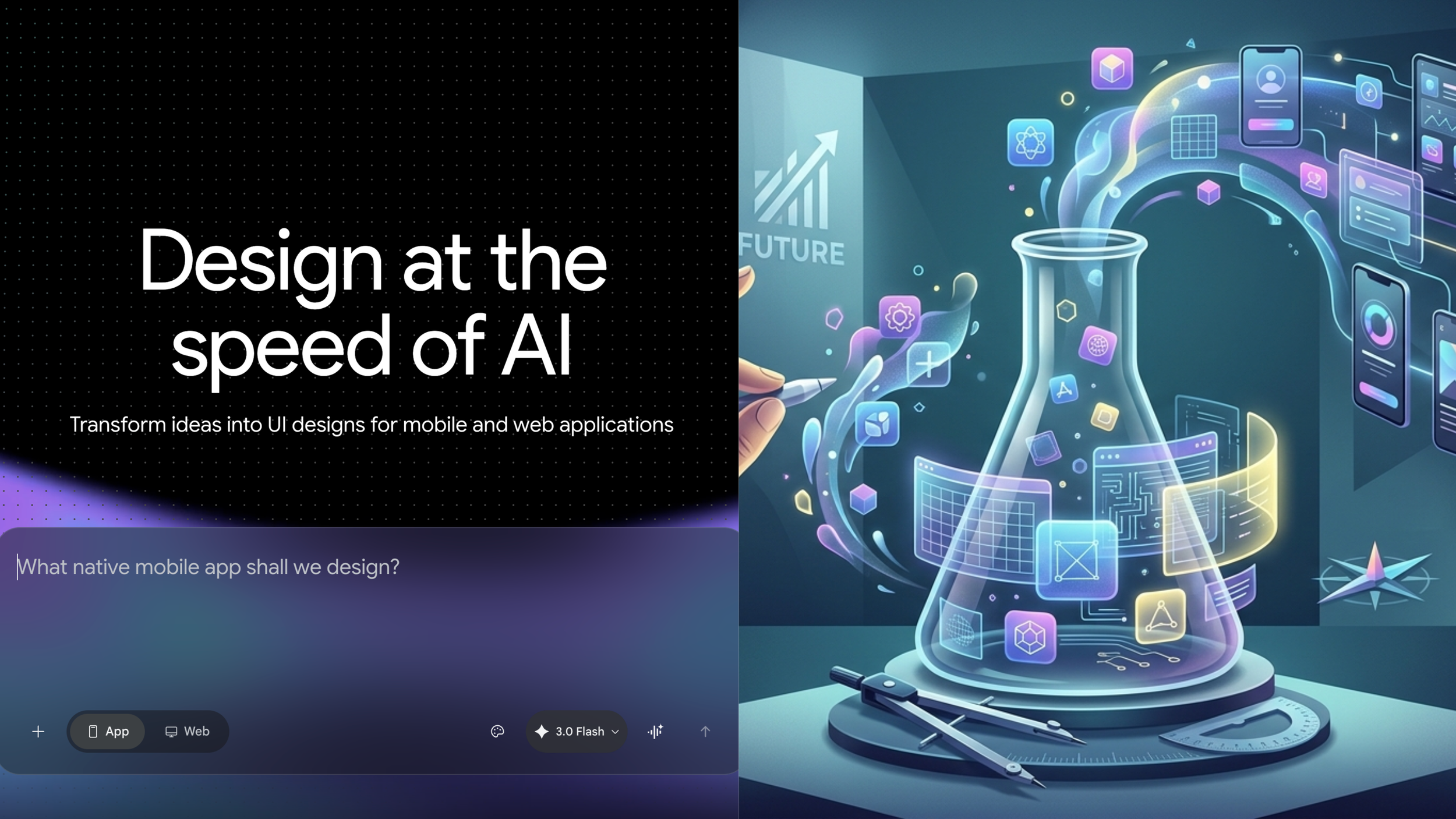
The digital product landscape is moving at a very rapid speed. With new tools being launched everyday, the UX/UI design process is changing too. Google Labs has been in the center of discussion in the design world. The tool was launched all the way in early 2002, but has been on a revival journey since 2023. It’s a playground where experimental AI intersects with application. For UX/UI designers, Google Labs can be the entire toolkit for how we can move from concept to completion.
The 2026 Features
Google Labs has moved away from just simple experiments to being a holistic integrated design force. Take a look at some of the notable features:
Stitch (AI Design Canvas): Powered by AI, Stitch can allow designers to generate high-fidelity interfaces by using natural language text inputs. Not only does it just build the UI of the screens, it lays out the entire user journey and plans logical next steps based on user interactions.
NotebookLM: NotebookLM is a powerful research assistant that can now transform text into insightful data visualization. It includes other features like the Cinematic Video Overview and an automated Infographic Generator. The tool can be fed complex research and data and turned instantly into visuals with structured layouts. This eliminates hours of manual data visualization work.
Gemini 3.1 Flash Light: This is a Gemini AI model that enables rapid interface prototyping. It allows designers to describe a tool and create working code almost instantly with a preview of the interface side-by-side.
Agentic Vision: This tool allows AI to look through and explore designs instead of just looking at them statically. The agent can help identify usability and design flaws to fill accessibility gaps that the human eye might miss in the ideation phase.
The impact on ux/ui design
The impact of this collection of tools is all about speed and intention. Traditionally, design was sat on the seesaw of aesthetics vs. time. However, with Google Labs, the manual labor of designing standard UI components, design systems, and user flows is not being automated.
This changes the designer’s role to focusing on telling a system the purpose of a design element and how it should look and feel. With these emerging AI tools, designers no longer need to keep a close eye on the mundane design processes such as pixel value.
My perspective
As a designer, as with any new AI tool, my perspective on Google Labs is to cautiously embrace it. For many years, there has been a daunting fear that “AI will replace designers.” However, Google Labs proves that AI is only automating the tedious aspects of design.
These tools can enhance and prompt creativity. Instead of thinking about it as “AI stealing my job,” designers need to reframe their mindset to “I just gained three hours to focus on….” The challenge with AI that we are currently facing is maintaining human touch. Although NotebookLM can generate almost perfect layouts, it’s still up to the designer to ensure that the interface aligns with the brand and business goals.
The future of UX/UI design is about a seamless collaboration between human and machine.
