
The Art of Designing your Creative Voice
Written by Cynthia Pan
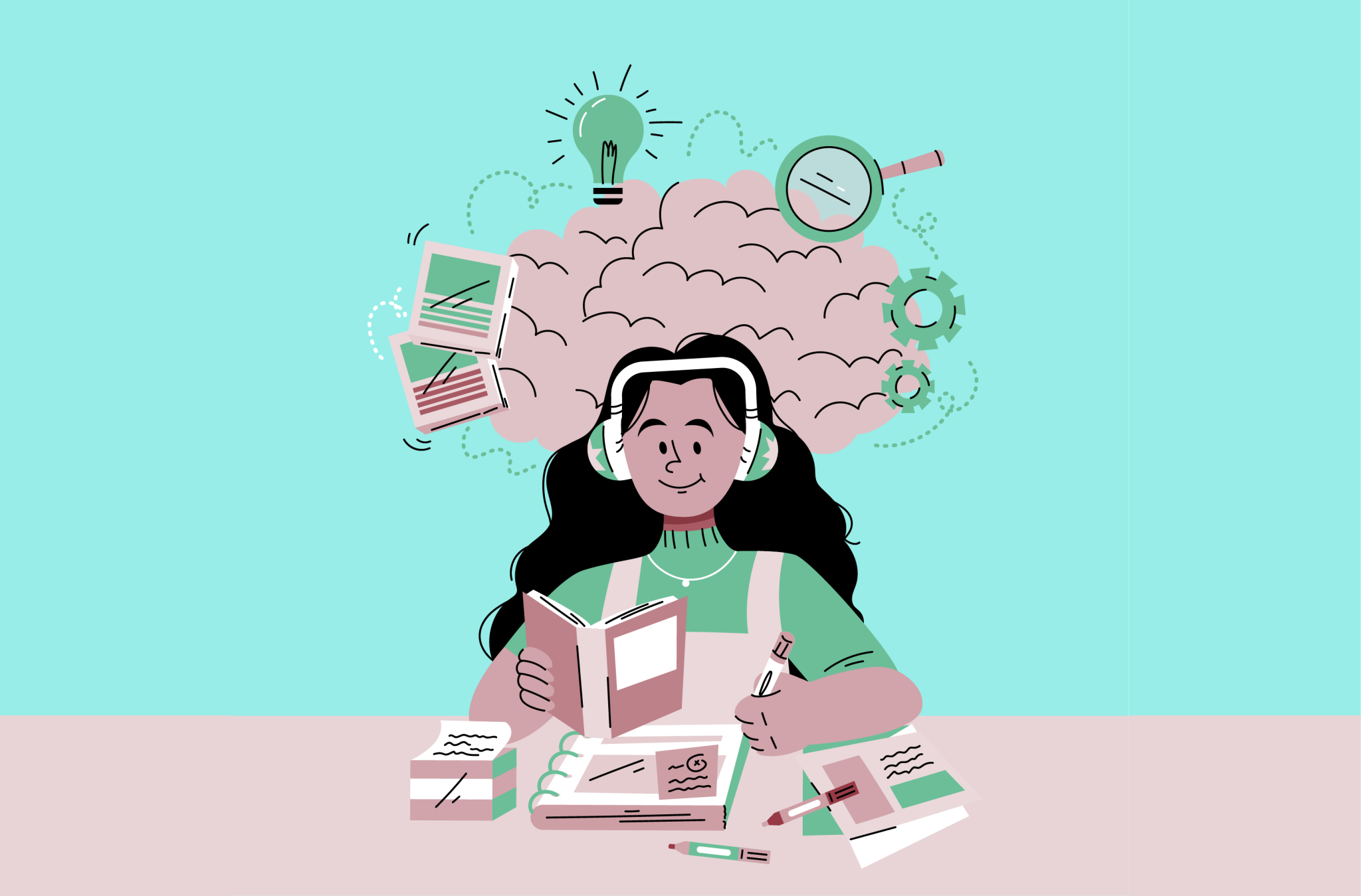
Many assume that an iconic design or a moving piece is brought to life from effortlessness and easy inspiration. However, the truth is, the “effortless style” is rooted in discipline through composition. This is achieved through demanding effort and constant iteration. The goal is to build a voice or style that is uniquely yours, which can be instantly recognizable to the audience.
looking for creativity
With the start of any creative project, an “internal research” through clustering can be extremely helpful. This process allows for gathering words or phrases associated with a main topic. It can help stimulate creativity and form new ideas. Clustering involves the following steps:
Identify a keyword: write down a central keyword, then underline and circle it
Quick association: quickly draw lines to associated words or phrases, then circle each addition to make a web of thoughts
Don’t restrain: avoid putting limits on these thoughts to allow the mind to make connections
Sequencing: highlight the strongest associations
the layout of design
After full brainstorming of initial ideas, it’s time to transition from creativity to logic by creating an outline of concepts. An outline can serve as a blueprint, helping to bring focus and order to creative thoughts. This eases the brain from having the responsibility to remember everything and allowing for concentration.
hooking the audience
Something critical to remember is that the audience is what determines if your design accomplished its goal. These days, people’s patience is declining, so the primary visual must be executed with intention, singularity, and the ability to spark curiosity.
To stand out, avoid cliche concepts and imagery, and instead, pay more attention to niche and specific details that create movement. As American writer William Zinsser said in his book, “On Writing Well,” good taste is defined in knowing what to omit and freshness is the solution.
the end
Sometimes when we finally get in a creative flow, it can be difficult to stop. It’s important to remember that knowing when to stop is just as important as knowing how to begin. For instance, using too many creative elements, colors, or graphics can lead to clutter and redundancy. This can drain the energy out of the piece. Alternatively, train to find an end that feels surprising. When the design has made its point, just stop there.
