
the collapse of concentration
Written by Cynthia Pan
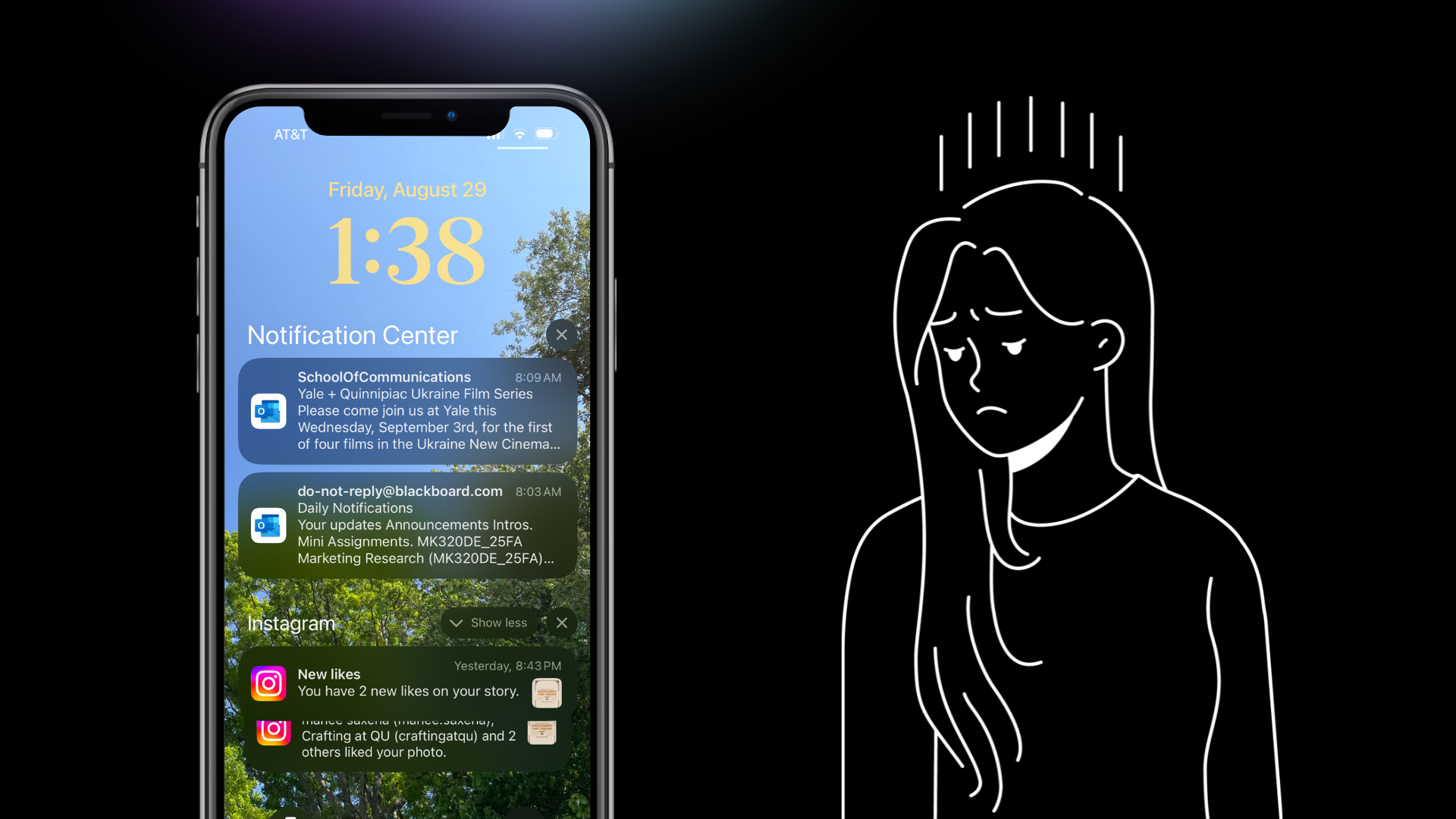
When was the last time you did something without checking your phone or doing something else or switching tabs on your laptop? You’re not alone if you fail to recall.
Ironically enough, I probably picked up my phone every time I received a notification while writing this..
It has been proven that the human attention span has decreased significantly in this generation. Here’s a stunning fact: the average attention span in 2000 was 12 seconds, now it’s only eight seconds, a four second difference (shorter than a goldfish). Whether or not you realize it, our shrinking attention spans have implications on all aspects of life, relationships, and society
what is happening to our attention spans?
In the digital era, focusing on one thing is hard and there’s a reason. When you get a notification from a text, email, or Instagram, your brain releases dopamine, the pleasure neurotransmitter that fuels addiction.
“The more information you pump in, the less time people can focus on any individual piece of it.”
Constant bombardment of new information makes the brain crave quick bursts instead of slow focus and deep thought. These days, does it ever feel a lot easier to scroll on TikTok than picking up a book?
The cost of our shrinking attention spans
Interpersonal Impact
Our shrinking attention spans affect us personally, shaping how we feel, act, and think. The impact: we feel tired, drained, stressed, and overwhelmed because our brains run out of energy.
In Stolen Focus: Why You Can’t Pay Attention—and How to Think Deeply Again, Johann Hari explains that we live under the delusion we can handle more than one task at a time, emphasizing the harmful effects of multitasking:
Effects of Multitasking
Switch-Cost Effect: switching between tasks burns brain energy, leaving you drained with little accomplished
Screw Up Effect: lowers accuracy
Creativity Drain: weakens original thinking
Diminished Memory Effect: reduces memory strength
Multitasking is more common than we realize—checking your phone while working, writing while talking, or calling while cooking. The mental costs of multitasking manifest into physical effects including stress, exhaustion, memory loss, and even lower IQ.
Technology and especially social media does harm to our conscience and ego. The digital world often makes us feel that we are the center of the world and everything revolves around us. When we constantly watch, read, react, and listen to something online, we become dependent on it. When social media dies down, some may start to feel lonely, bored, and anxious.
“It’s when you set aside your distractions that you begin to see what you were distracting yourself from.”
It is dangerous that we hide behind social media to avoid the real problems that we face. Escaping and resorting to it is the reason why we aren’t able to think deeply and truly be comfortable with ourselves.
Professional Impact
The same consequences of distraction and multitasking that impact us on a personal level also influences work culture and society. For instance, if employees are encouraged to speed up, their work productivity may decrease, yielding worse results, which weaken the overall performance of the company. Decreasing attention span might also block creativity and deeper critical thinking, which are useful skills for positions that require problem solving. In addition, it can harm the overall attitude of people within society. If people are unable to increase their attention span, that might hurt them humanistically. It can damage or weaken relationships, increase stress, and overall make society feel less happy, with less enjoyment and fulfillment.
Finding balance
Breaking these habits requires a change to the environment. The good news is that there are strategies to help train attention.
Realize it’s an ongoing fight: Just like any other bad habit, it’s not something that can be fixed overnight. To attain happiness, we must do the hard thing and acknowledging that it’s a process can help with that.
Pre-Commitment: remove temptation from the get-go. This can be done by deleting distracting apps, turning off notifications, logging out of accounts, or placing your phone in another room. Narrowing your choices reduces temptation.
Practice mindfulness: meditation for even just five minutes can help strengthen the mind and focus.
Embrace boredom: Be comfortable in periods of boredom and fill that time with hobbies you enjoy instead of doom scrolling.
Recently, I tried this exercise from the New York Times called Test Your Focus: Can You Spend 10 Minutes With One Painting? The exercise challenges you to look at this piece of art for ten minutes straight without distractions. Honestly, it was difficult and I found myself to be uncomfortable, especially after the two minute mark. However, after completing the exercise, I did feel more grounded and aware of my surroundings and less guilty than I would feel if I were to spend ten minutes on my phone. Small exercises like this can make all the difference so try it out and see what you notice about your attention span and mind.
