Gather
mobile
Project Overview
ROLE: UX DESIGNER | SCOPE: OCT–DEC 2025 | TOOLS: FIGMA, Illustrator, Procreate
Gather is a mobile platform designed to bridge the gap between social intention and action. While maintaining meaningful adult relationships requires significant intentionality, many individuals lack a structured system to facilitate it. Existing "discovery" tools often fail by ignoring specific group dynamics, budgets, and energy levels, leaving the burden of organization on a single social planner who eventually burns out.
The challenge
To lower the activation energy required for human connection by transforming planning from a chore into a low-friction, shared experience. Gather aims to combat the modern "loneliness epidemic" by providing the digital infrastructure needed for regular, intentional connection.
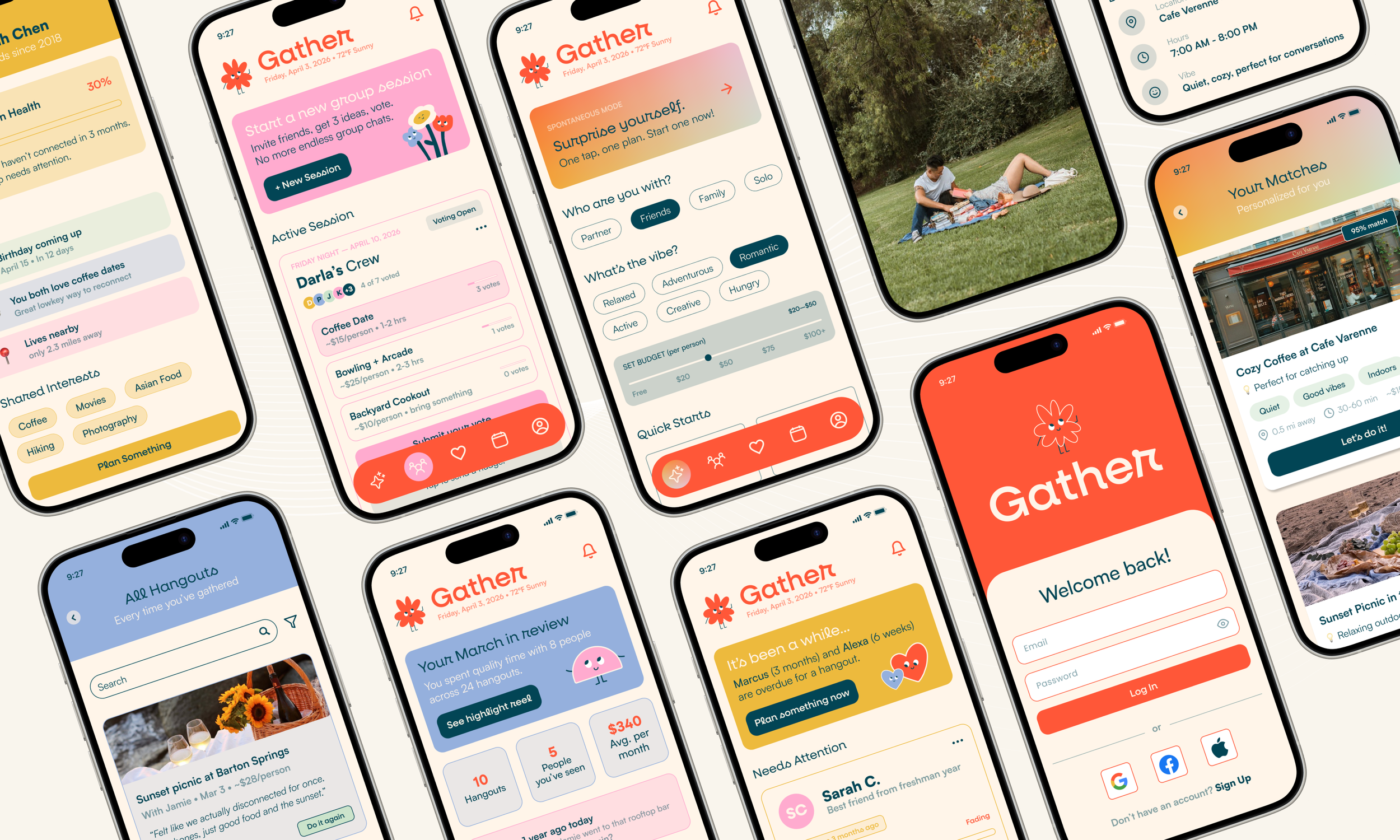
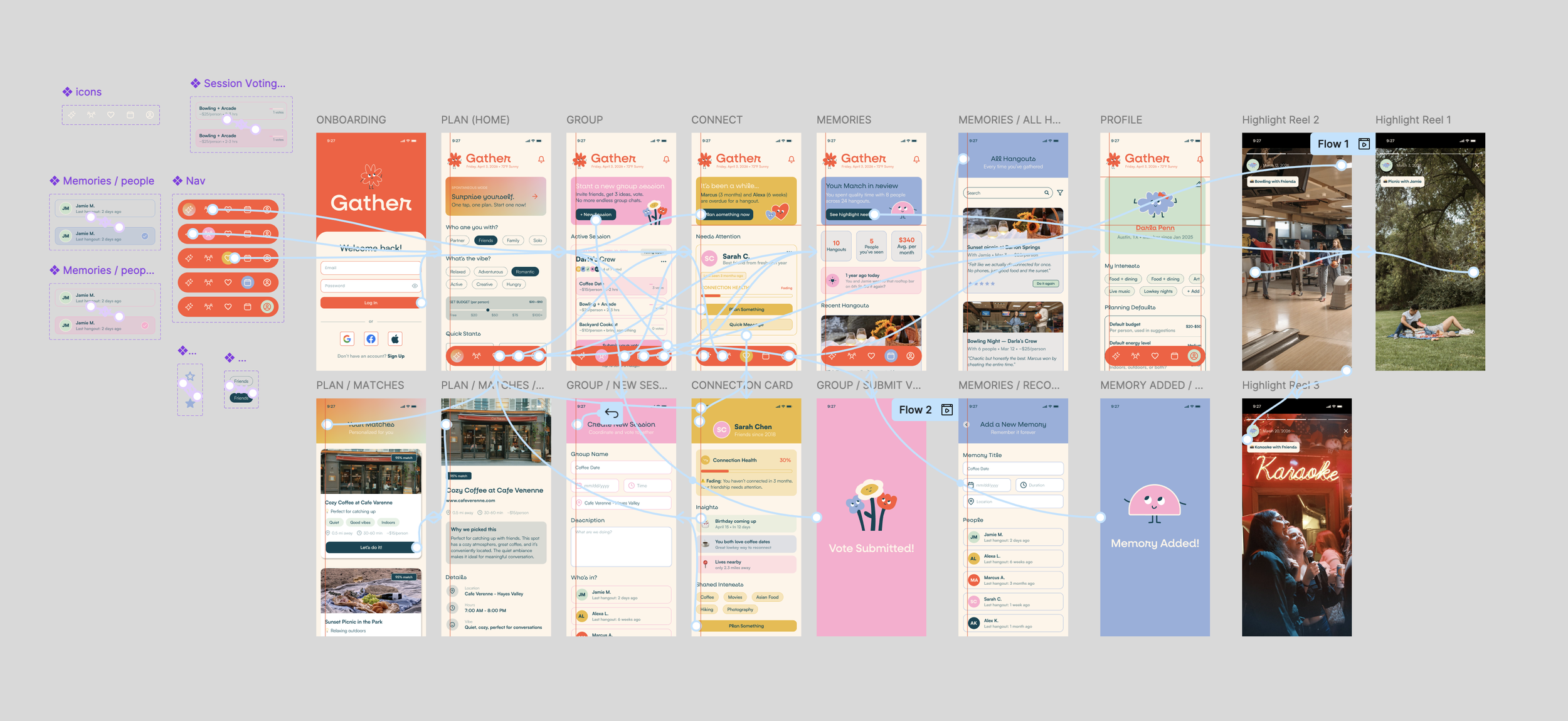
Key screens
User research + insights
To understand the friction points in social coordination, I conducted qualitative interviews across three distinct relationship archetypes: a romantic couple, a college friend group, and a parent managing family logistics. Despite differing life stages, a universal set of pain points emerged:key research findings
PLANNING BURNOUT
Coordination consistently defaults to one person, leading to decision fatigue and exhaustion.
THE RECONNECTION BARRIER
Users feel guilt over "faded" friendships but find the perceived effort of reaching back out to be daunting or formal.
GROUP CHAT CHAOS
Standard messaging platforms become chaotic once a group exceeds eight to ten people, causing plans to evaporate before they are finalized.
PRIVACY
While users value personalization, there is a clear boundary regarding data privacy; any feature that feels like surveillance is a hard dealbreaker.
user personas
I developed two core personas to represent the primary and secondary user segments:

user flows
I designed three simple paths to make the app easy to navigate:
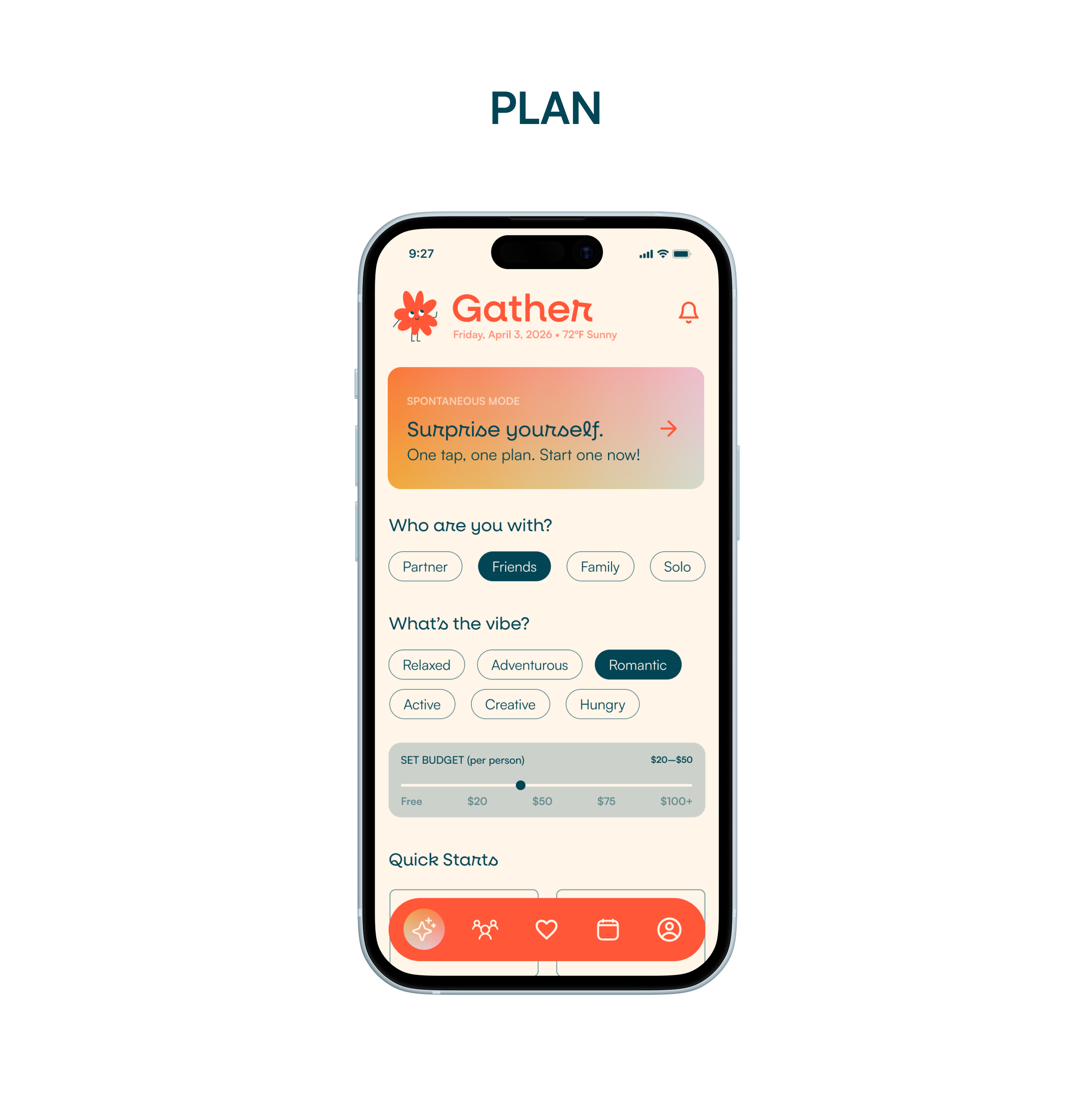
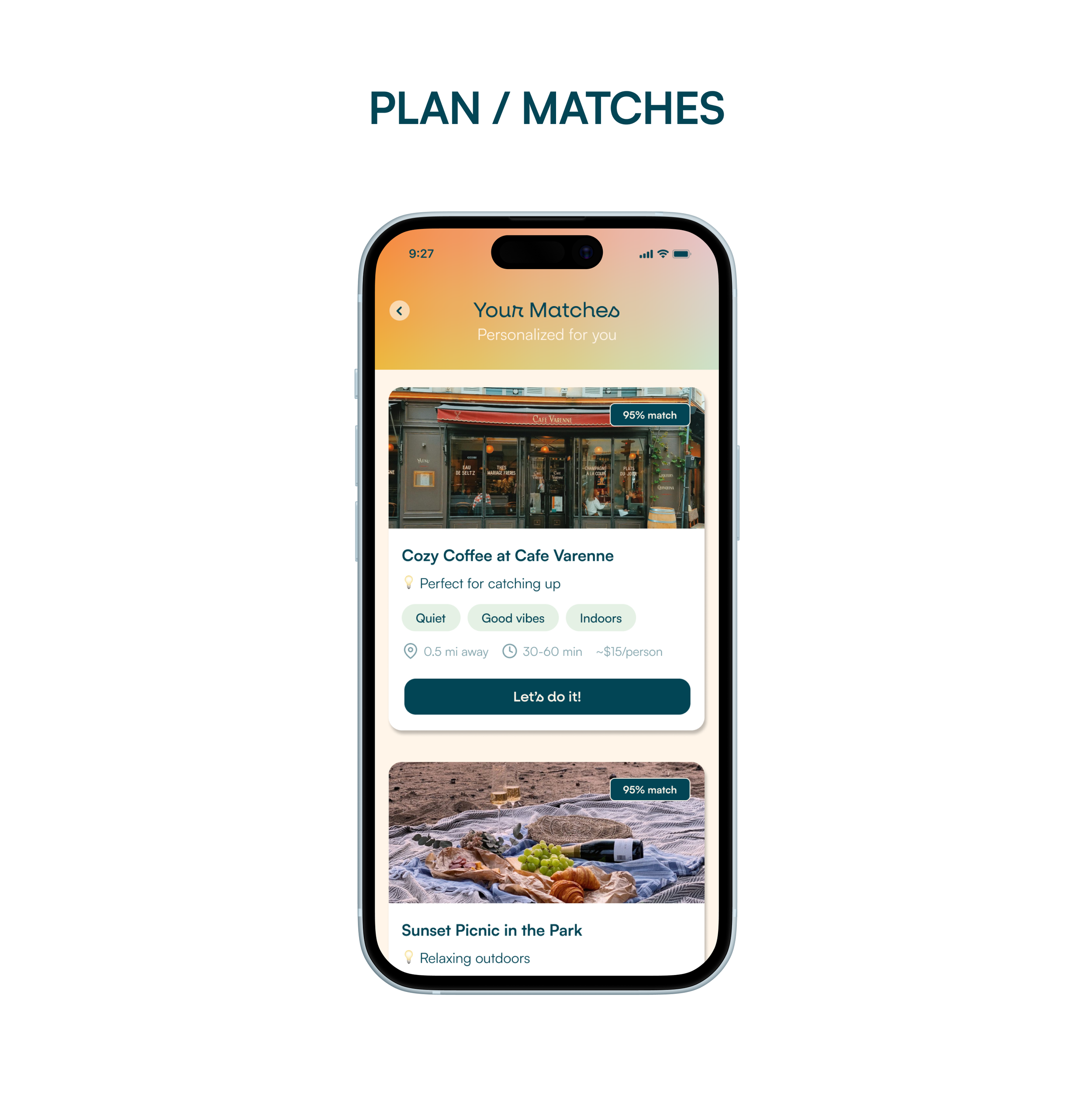
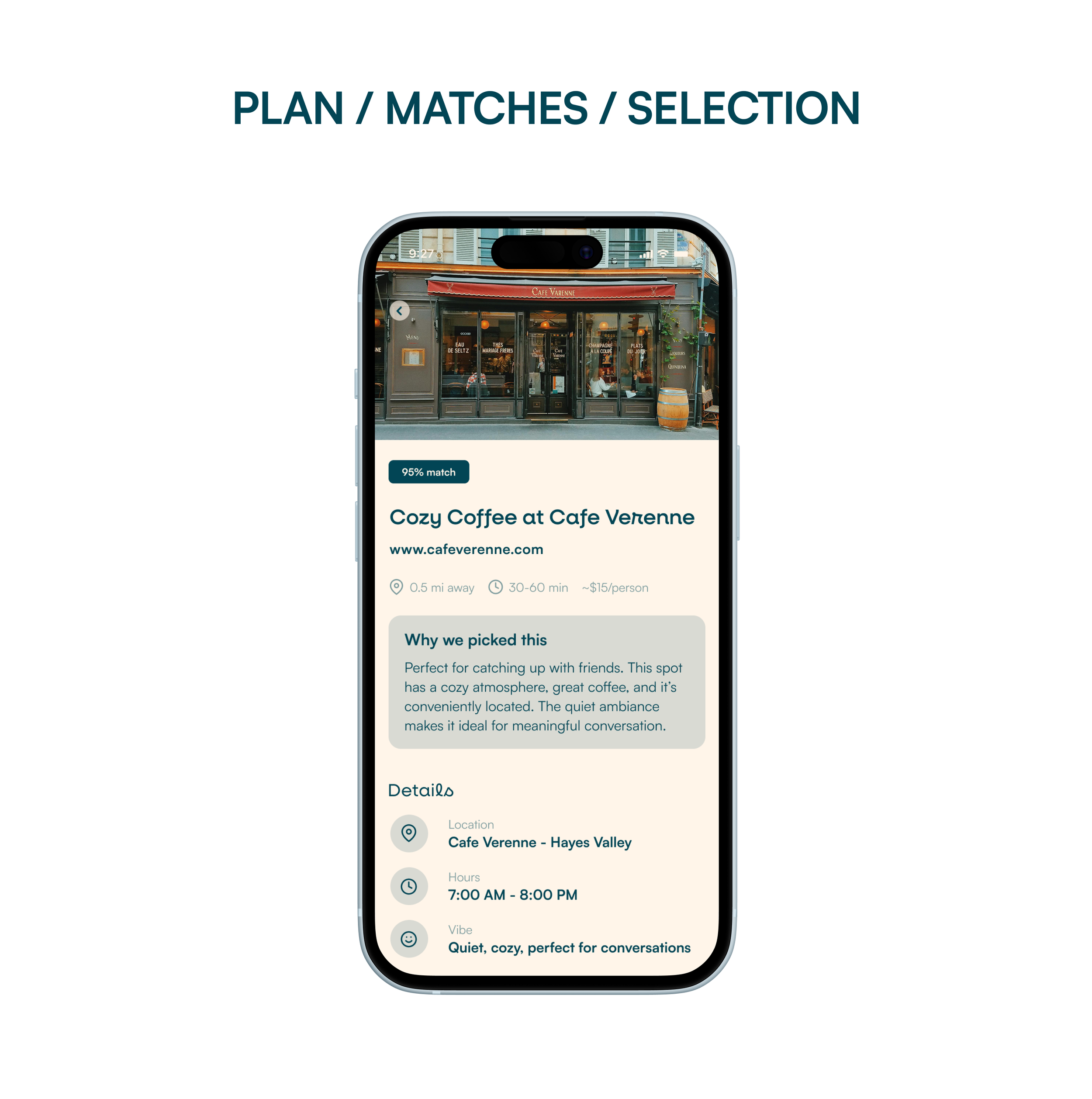
Smart Planning: The app asks about your mood, budget, and energy to suggest the perfect activity instantly.
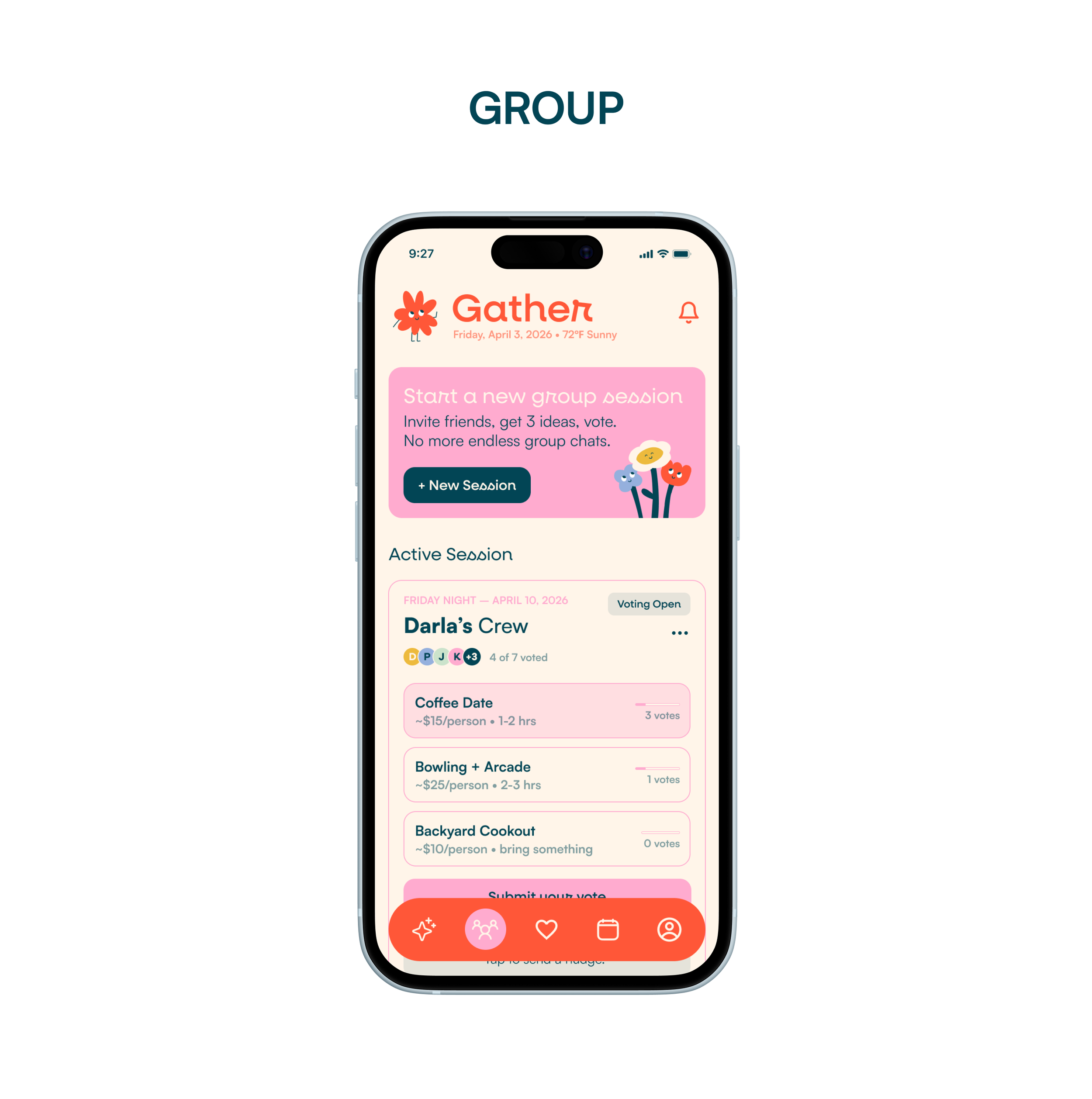
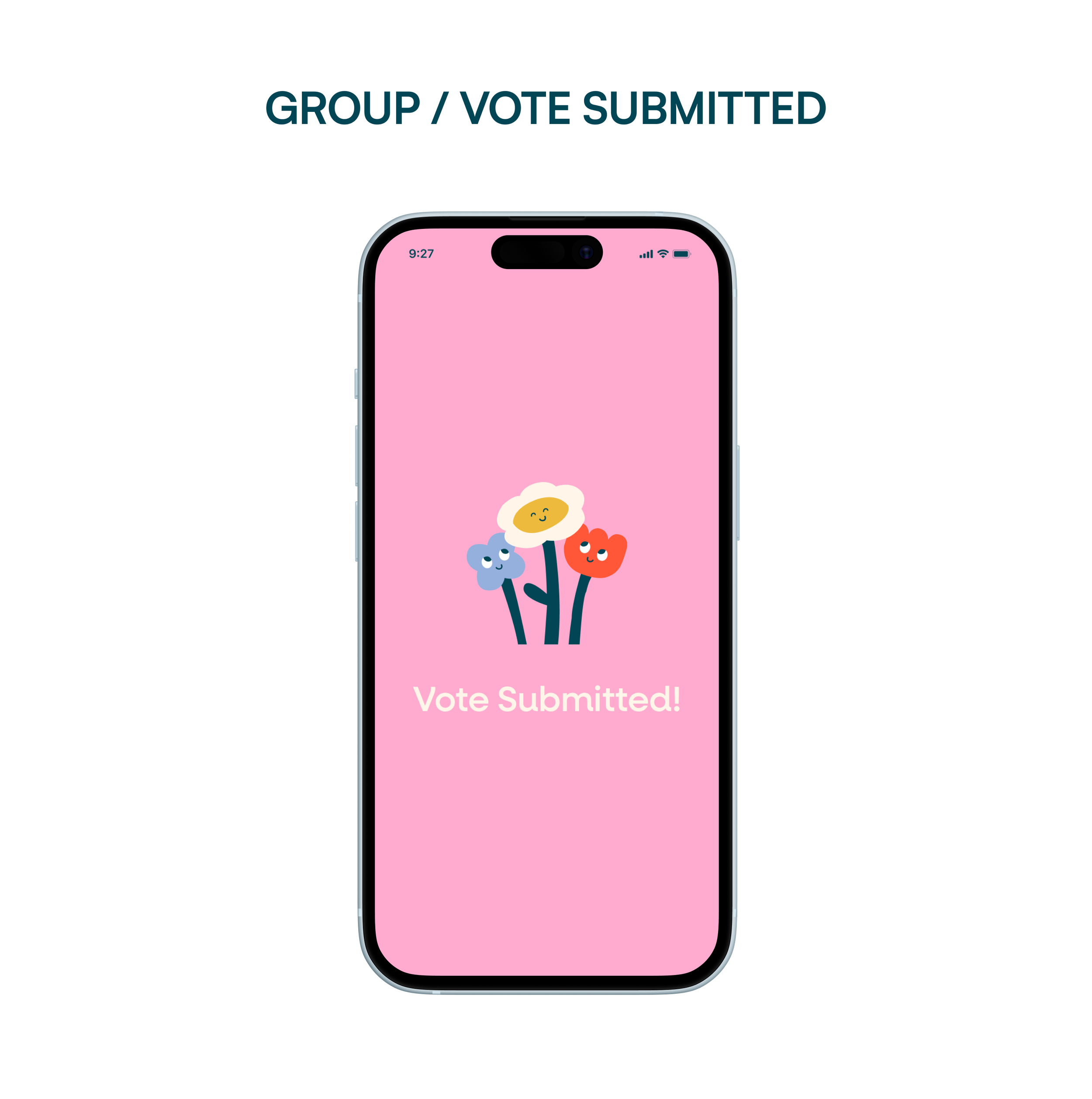
Easy Group Decisions: Instead of arguing in a chat, friends can vote anonymously on a few ideas to reach a quick decision.
Staying Connected: The app tracks how long it’s been since you last saw someone and sends a friendly nudge to reach out.
information architecture
The Information Architecture for Gather is built around five pillars to ensure a streamlined, intuitive navigation experience:
Plan: A contextual input system for individuals or families to generate AI-powered activity suggestions.
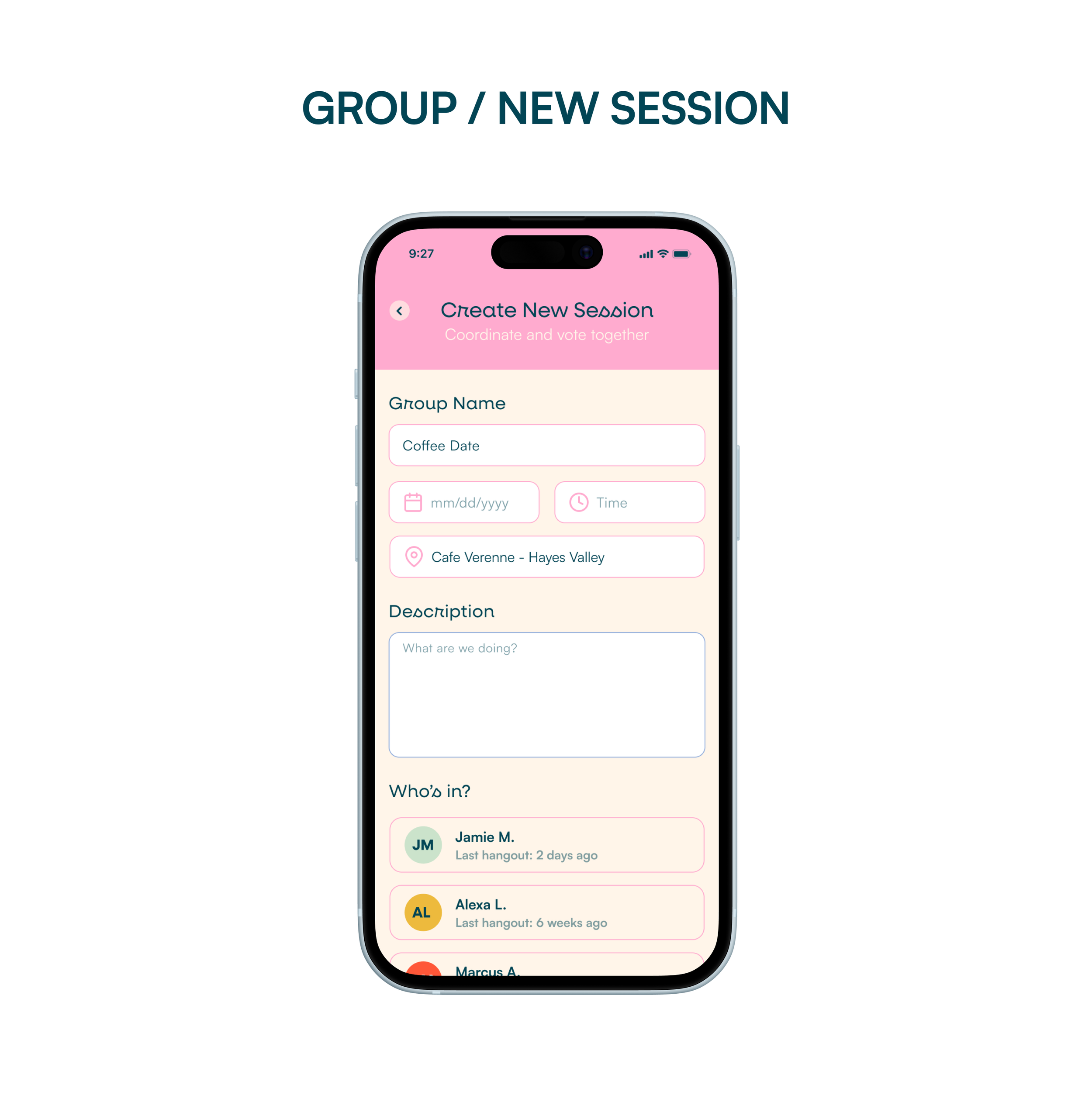
Group: A coordination hub for session management and anonymous voting to reach consensus without debate spirals.
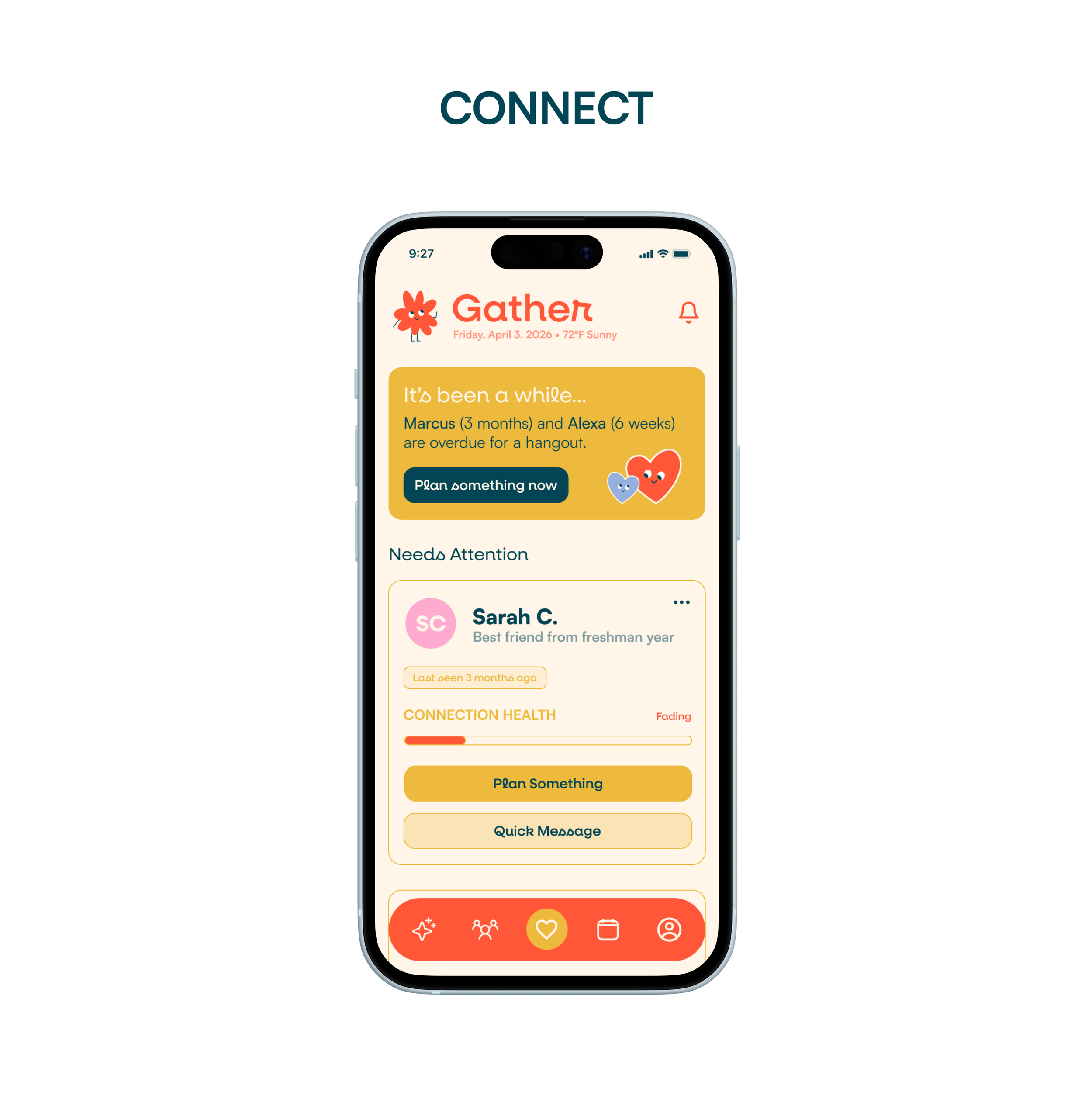
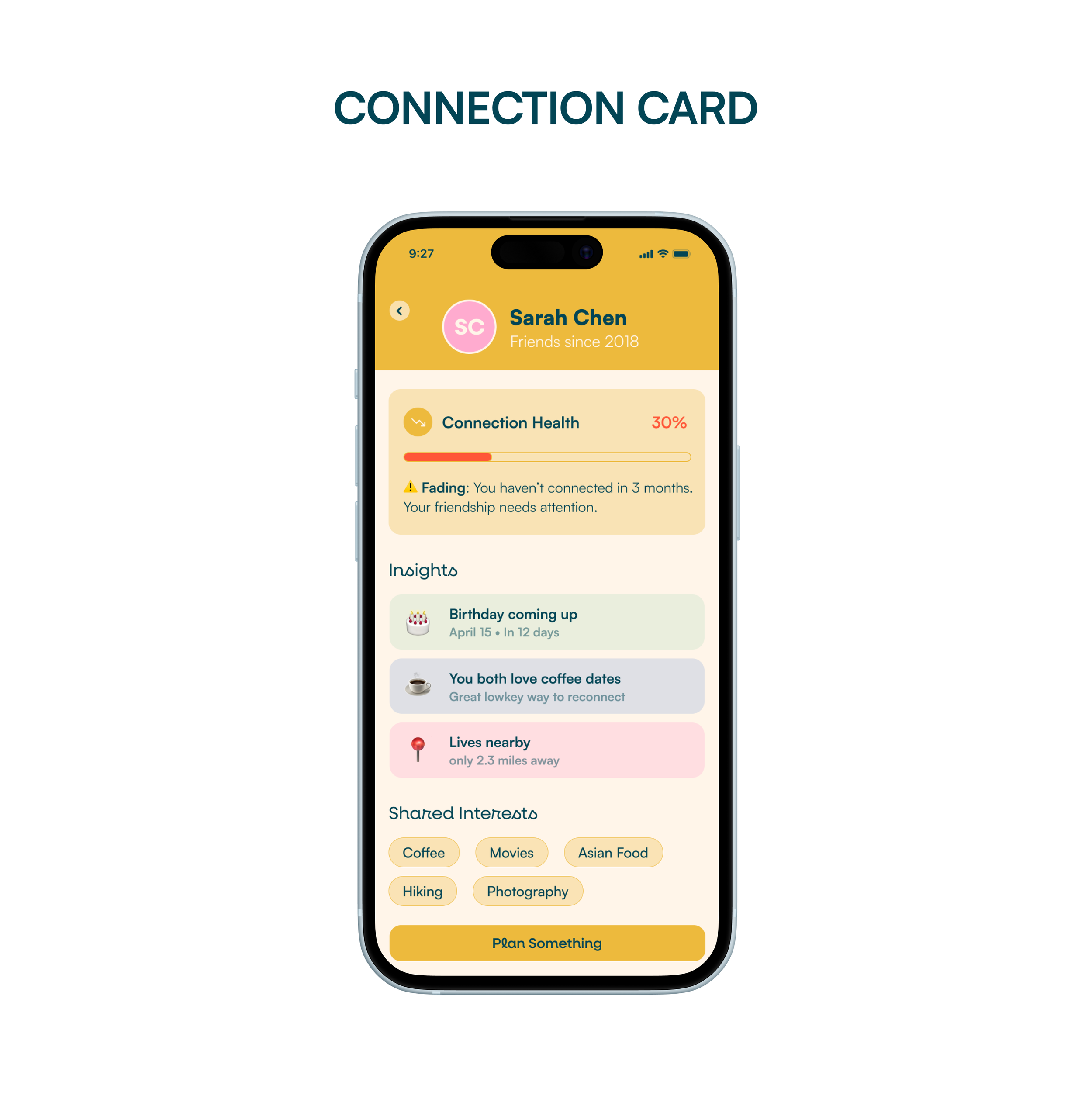
Connections: A relationship health dashboard that tracks "last seen" data and provides subtle nudges before friendships fade.
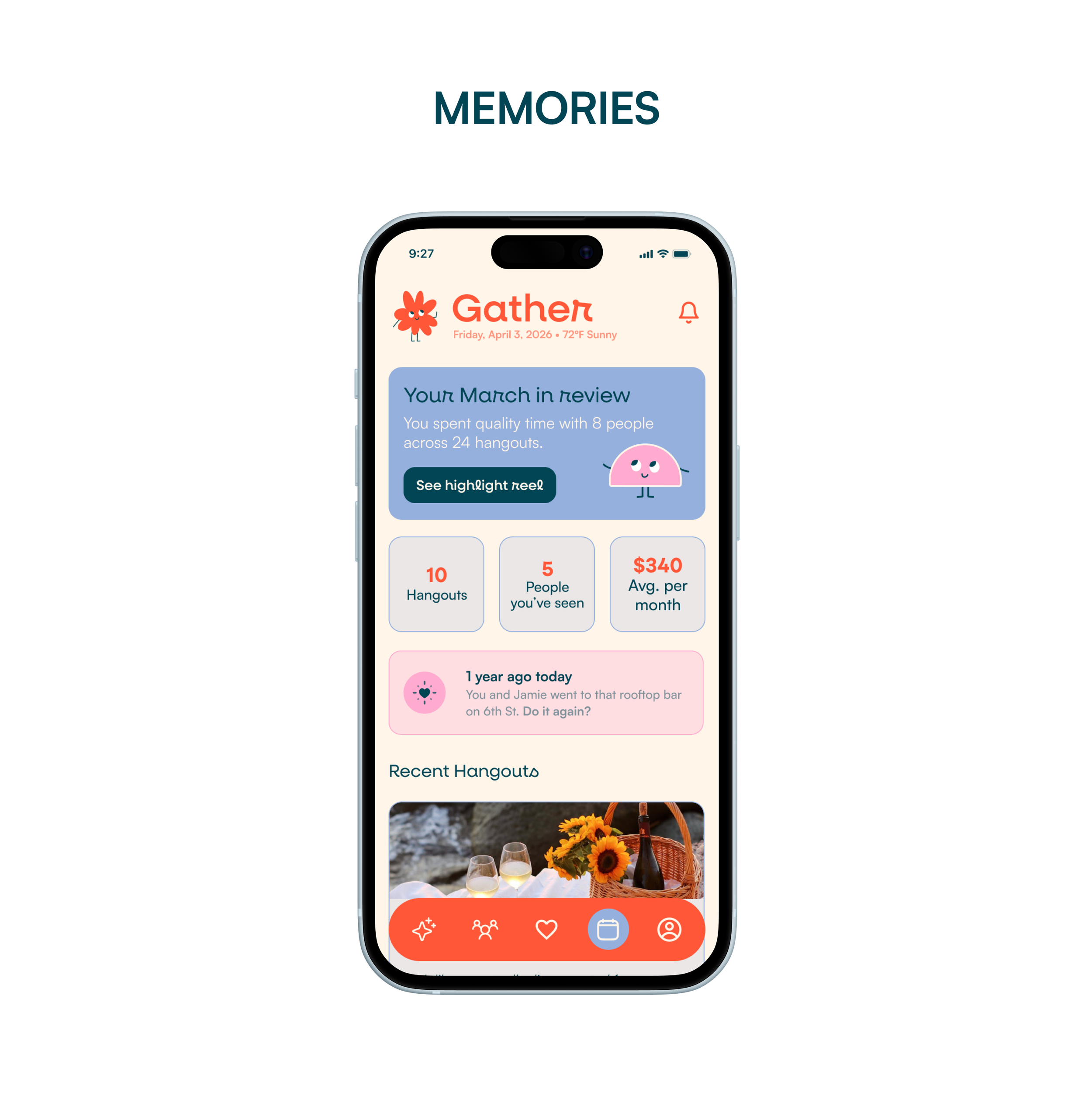
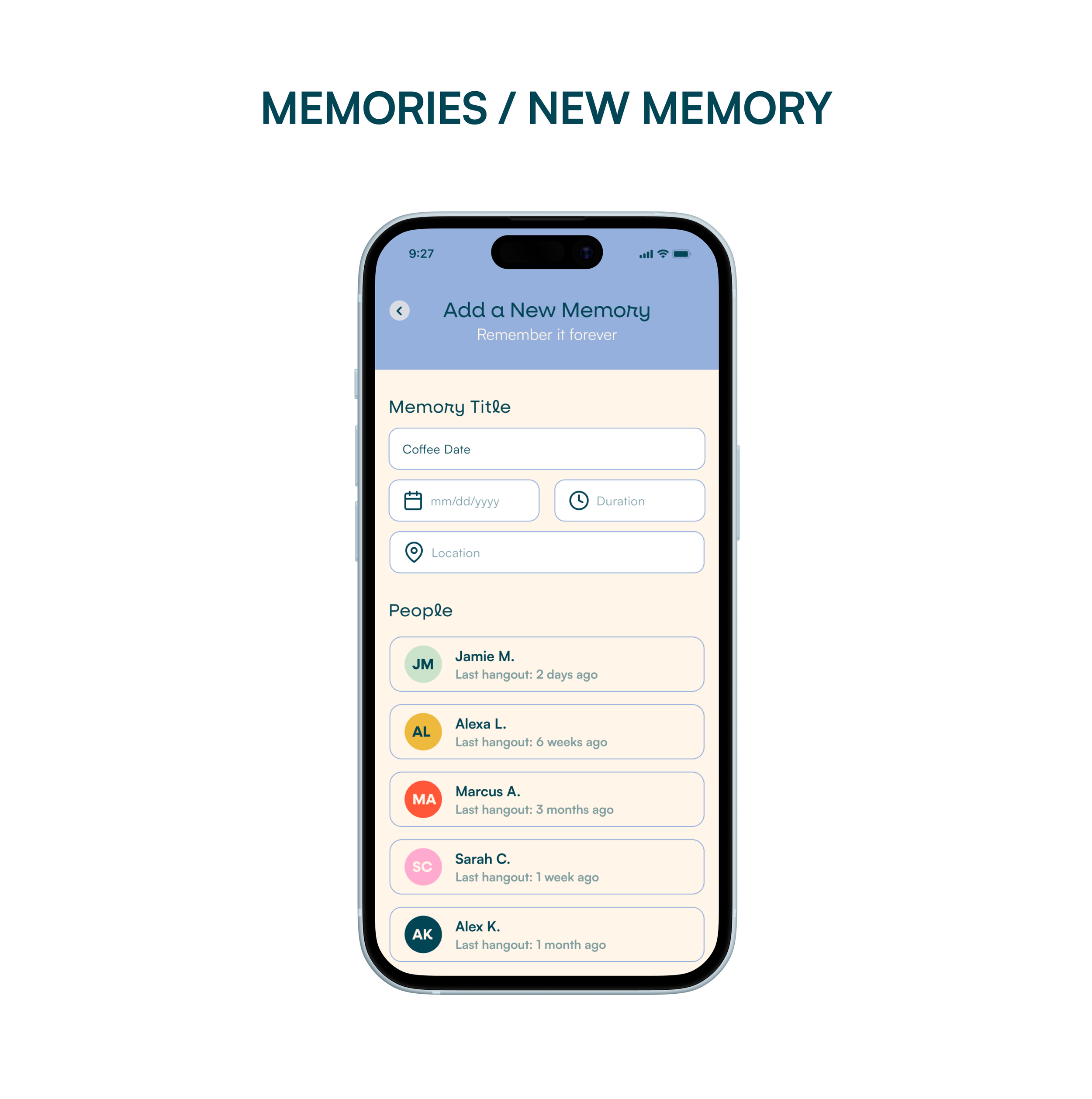
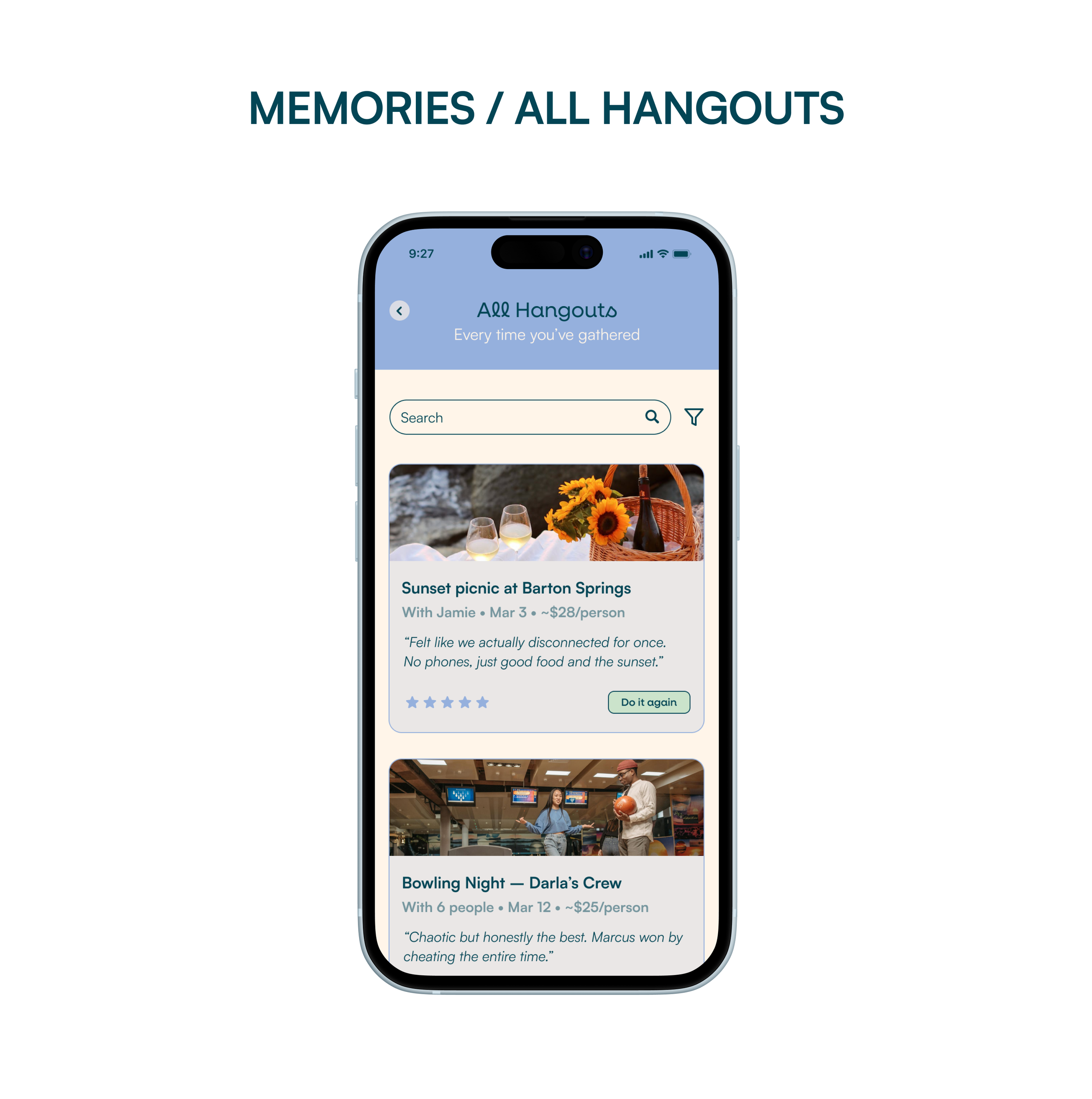
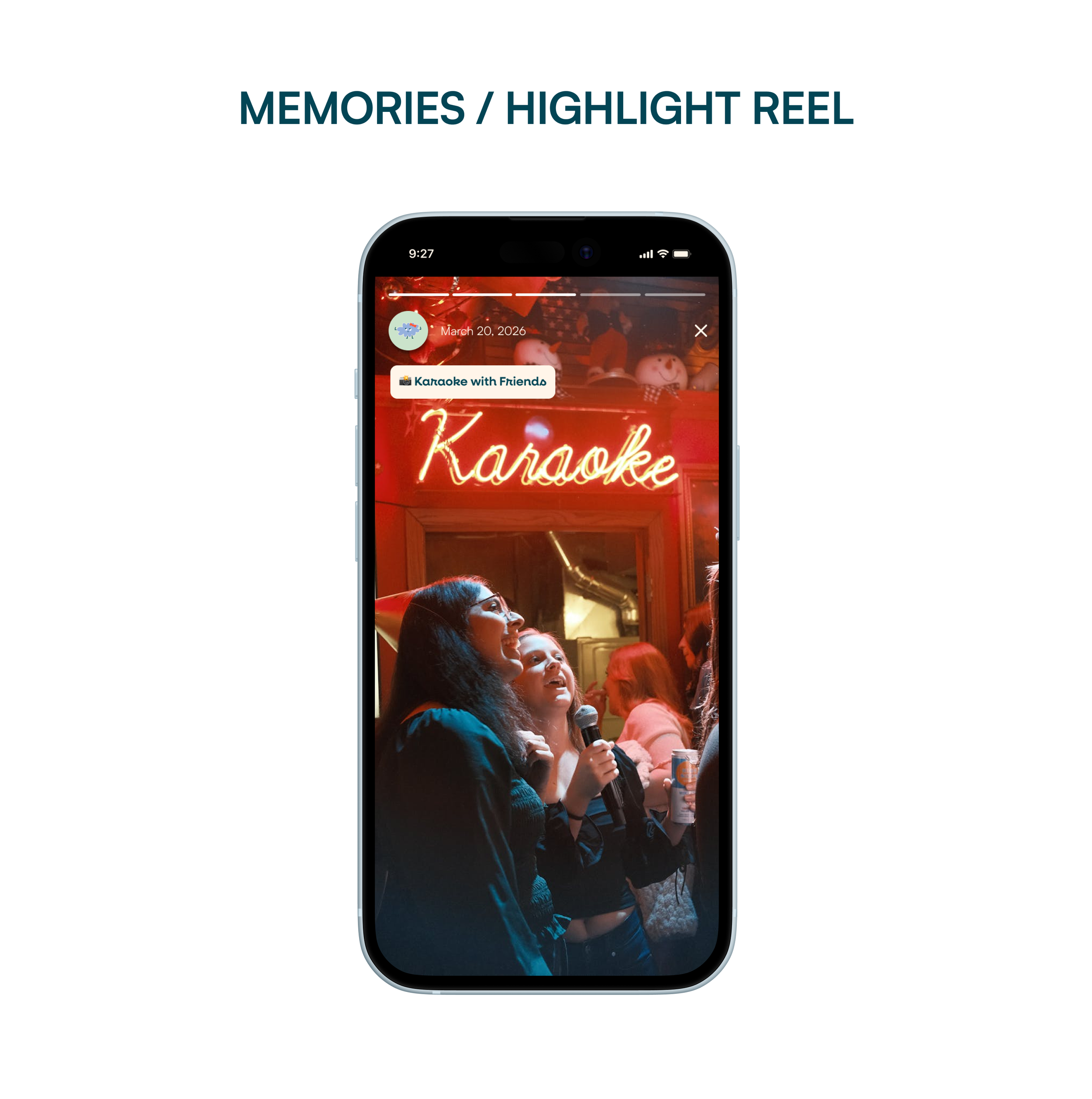
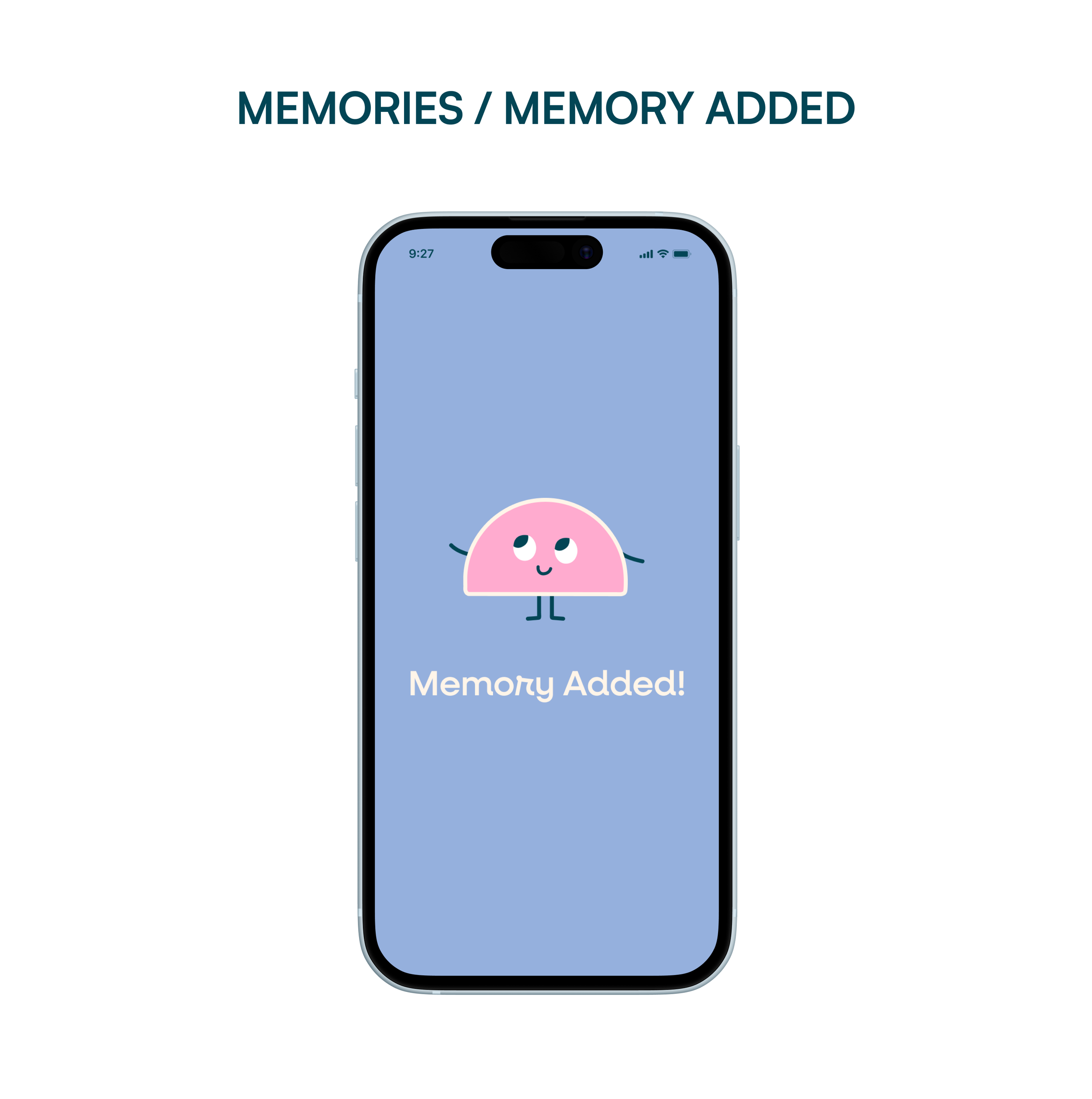
Memories: A gallery of photos and notes from previous hangouts to reinforce the value of quality time.
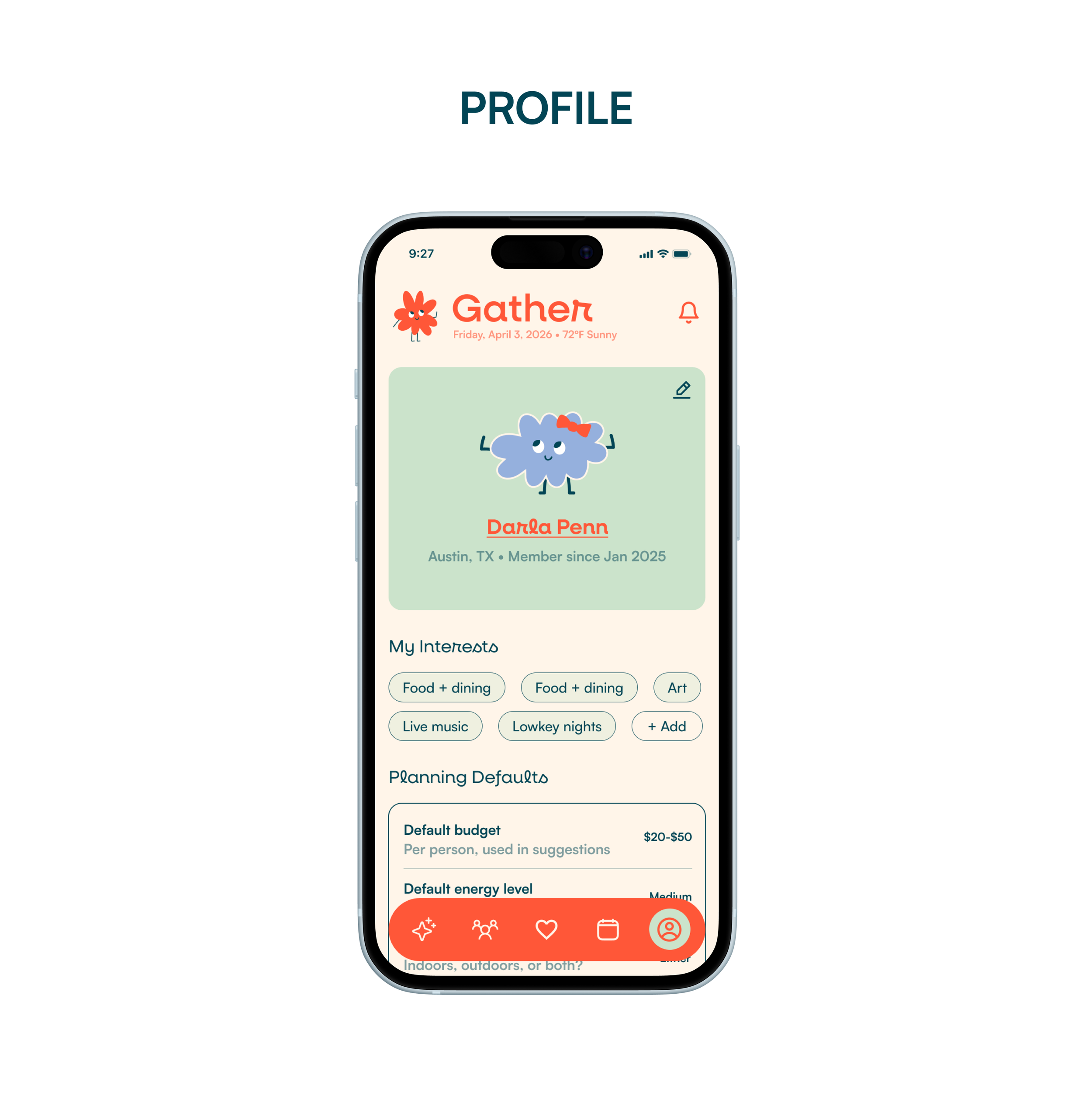
Profile: A management area for preference defaults, budget limits, and privacy controls.
Ideation & Iterative Design
The ideation phase focused on low-fidelity analog sketching to rapidly translate research insights into tangible solutions. By prioritizing pen-to-paper drafts, I was able to explore the logic and information hierarchy required to streamline the planning process.These initial sketches allowed me to experiment with various layouts
The final solution
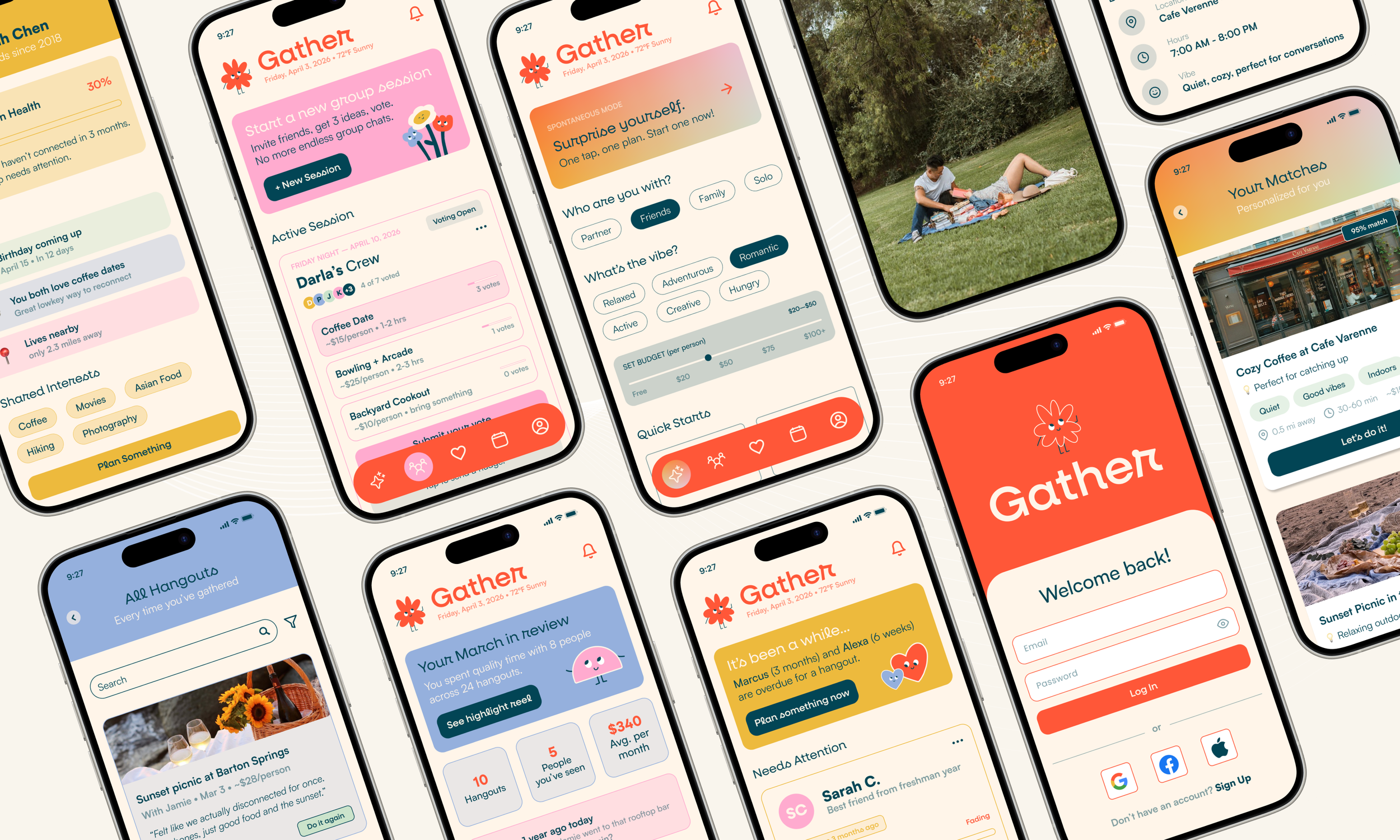
The Gather app provides a seamless, data-rich yet digestible experience, empowering users to move from "we should hang out" to a fully planned, memorable experience.
Core features
SPONTANEOUS MODE
An AI feature that provides quick hangout ideas for those willing to try anything.
RELATIONSHIP HEALTH MAINTENANCE
Proactively monitors connection health and provides low-pressure prompts to reconnect with friends.
ANONYMOUS GROUP VOTING
Eliminates "decision fatigue" by allowing groups to reach a consensus on activities without chaotic group chat debates.
EASY LOGISTICS
Provides a complete plan, not just a starting point, to reduce the mental load on the organizer.
By focusing on usability, clarity, and visual appeal, Gather presents social planning in an engaging, intuitive manner, encouraging users to maintain their connections consistently and take proactive steps toward deeper friendships.
Retrospective
This project reinforced the importance of user research and iterative design in creating meaningful digital experiences.
If I were to refine this project further, I would:
Expand User Testing: Conduct unmoderated usability testing with a broader demographic to validate the logic of "The Glow Test."
This case study showcases how human-centered interactive design can transform complex data into a compelling, user-friendly experience, bridging the gap between information and action.