
ROLE
UX/UI Designer, UX Research, Branding
TOOLS
Figma, Illustrator, Procreate
TIMEFRAME
October - December 2025
ecovision
digital product interface
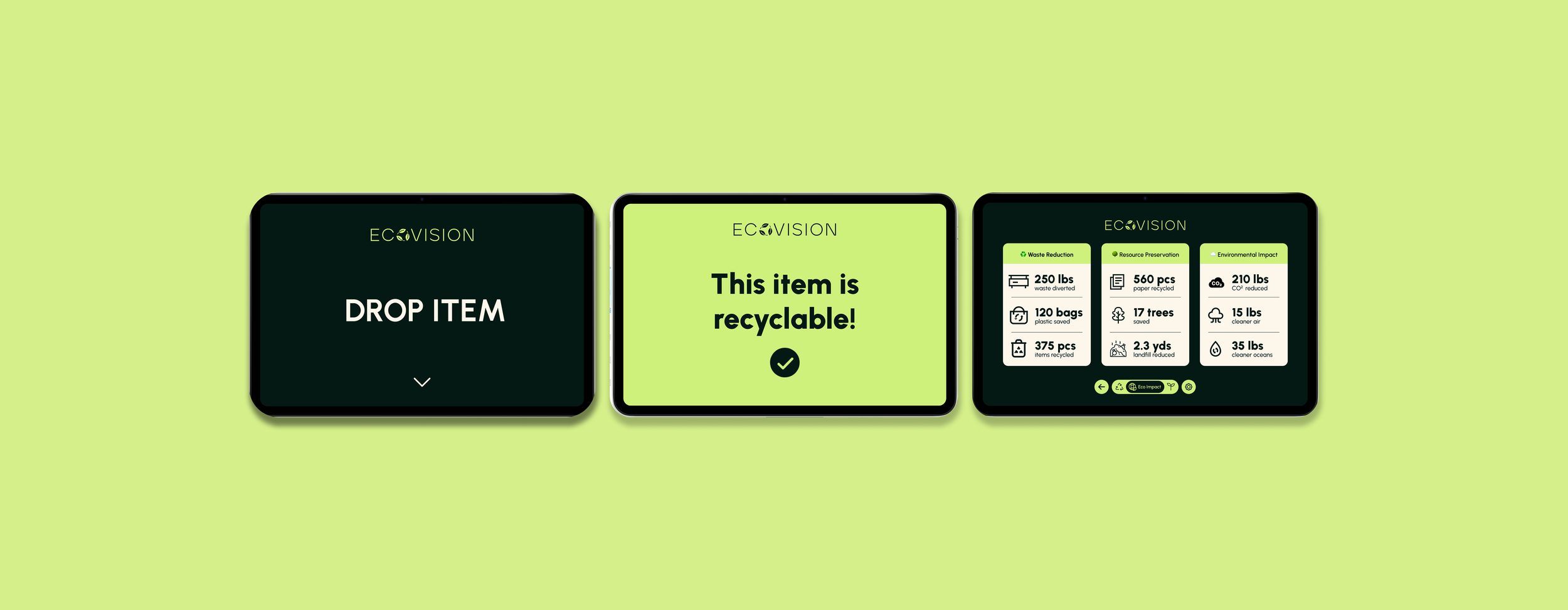
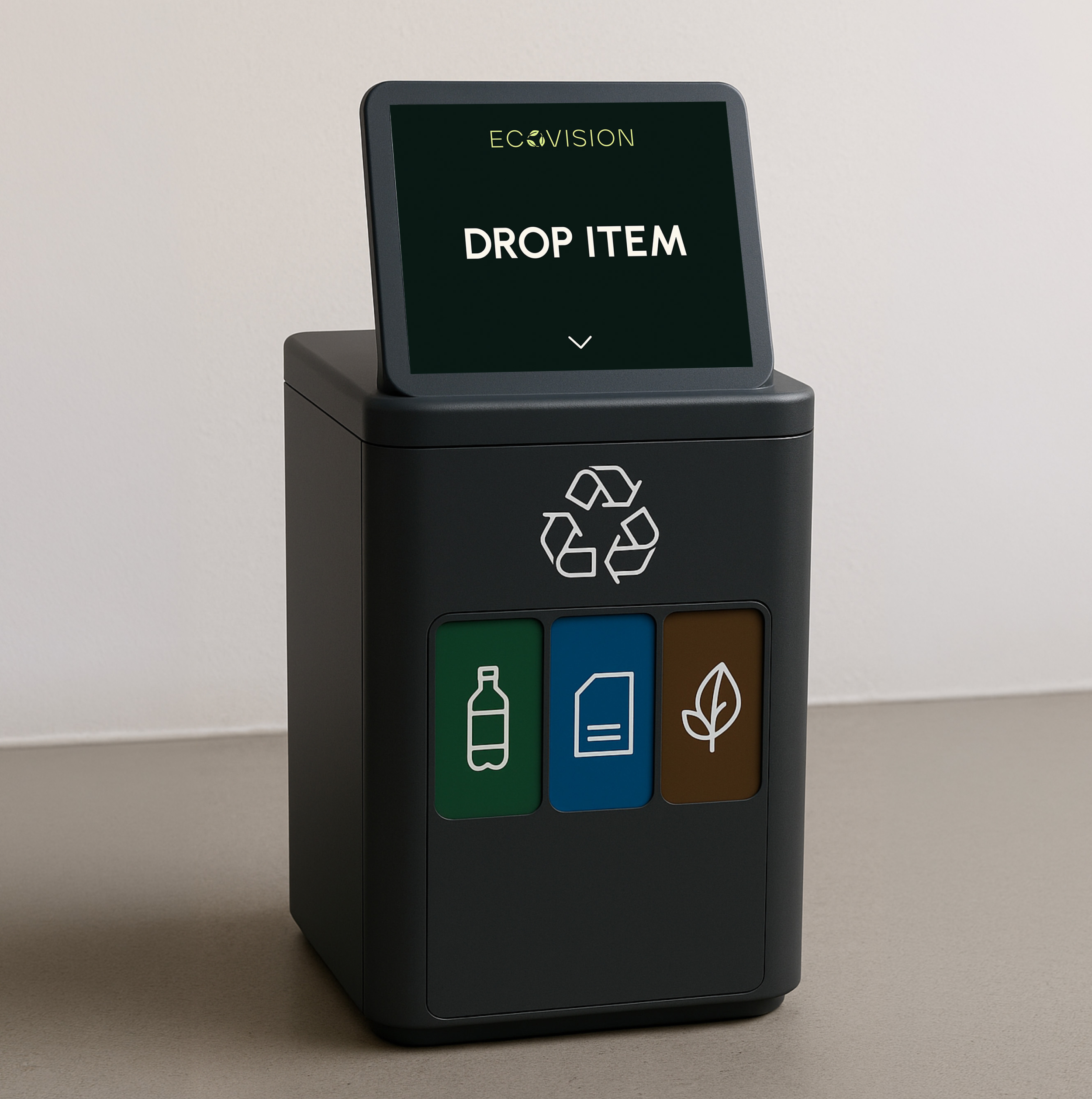
ECOVISION is a smart recycling bin designed to reduce recycling contamination by guiding users in real time. The smart bin utilizes AI object recognition, sensors, and an interactive digital screen. The product's objective is to identify and automate the sorting of materials such as plastic, paper, glass, or compost, as well as providing simultaneous, clear feedback and education to the user. ECOVISION is designed to make the recycling process more intuitive and create a more engaging experience around it.
The challenge
Recycling contamination is an extensive and national issue. The problem is that recyclable items are sent to landfills simply because users are uncertain how to sort them. In fact, according to the United States Environmental Protection Agency (EPA), about 25% of all recycling is discarded due to contamination and are instead, being sent to landfills. This problem contributes to global pollution.
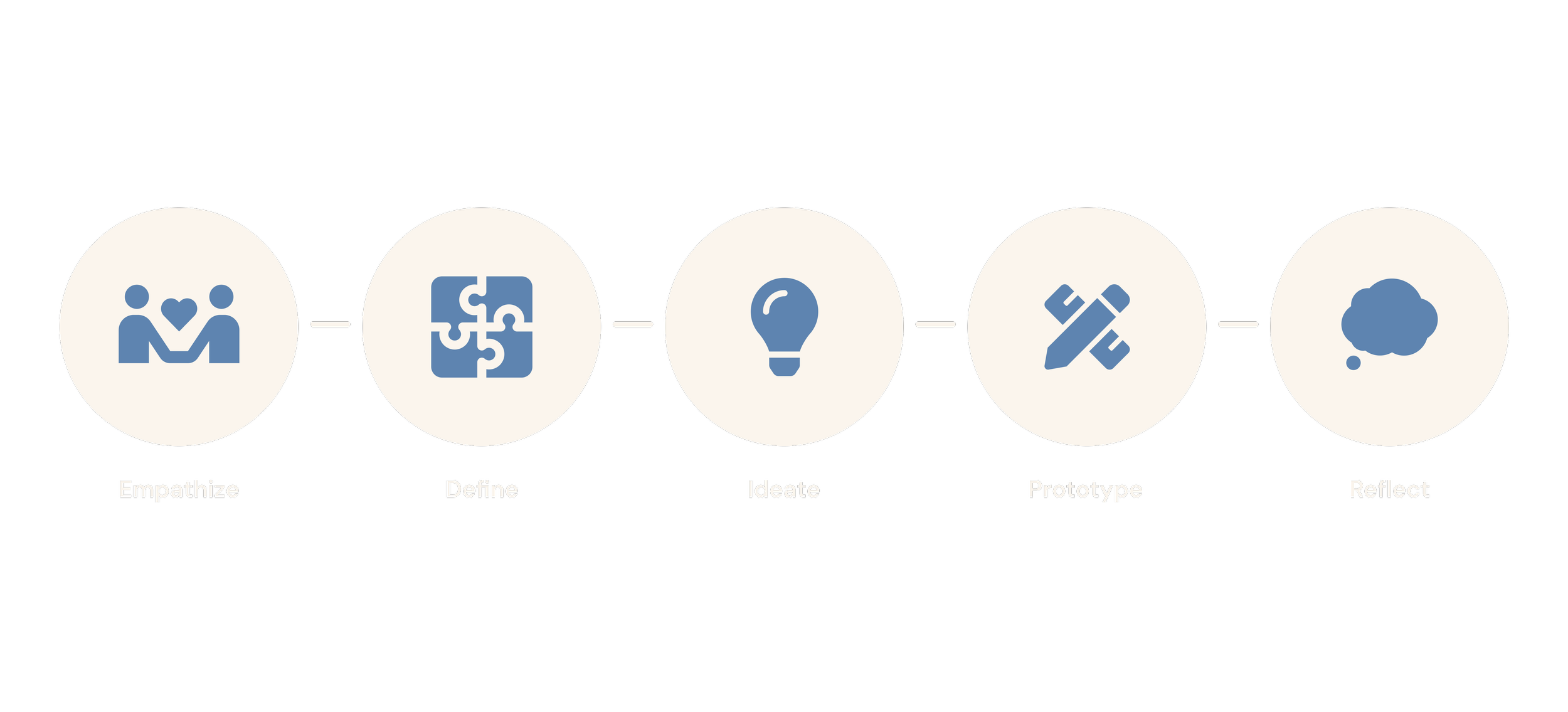
Design process
OVERVIEW
User Research
Approach
empathize
User research
I researched how incorrect waste sorting leads to tons of recyclable materials being sent to landfills. The study focused on why typical recycling methods fail, identifying that most systems rely too heavily on individual user motivation and prior awareness rather than providing real-time assistance.
approach
User research influenced the formation of the final design. Research methods included user interviews, the creation of user personas, and user journey maps to better understand our target audiences' emotions, pain points, and decision-making throughout the recycling process.
User interviews helped discover that convenience and timeliness were the most important factors that motivate users to recycle more accurately.
main interview questions
How confident are you that you’re recycling items correctly, and why or why not?
Have you ever been unsure about whether something was recyclable? Can you give an example?
Would you use a smart recycling bin that gives sorting guidance or feedback? Why or why not?
How do you feel about using technology to improve recycling in your building?
How do you feel about using technology to improve recycling in your building?
OVERVIEW
Key Insights
User Personas
Journey Map
define
key insights
sorting uncertainty
Users are frequently unsure of which materials belong in which bin.
systematic failure
Incorrect sorting is often a result of systemic confusion rather than a lack of care, requiring a tool that supports user intention.
PLANNING BURNOUT
motivation gap
Traditional bins provide no immediate feedback, making recycling feel like a chore with no visible impact.
information overload
Current recycling labels are often cluttered or hard to understand, creating navigational friction during the quick act of disposal.
affinity diagram
I organized research data into an affinity diagram to identify core themes, such as "Confusion About Recycling Rules" and "Reliability Concerns". This allowed me to prioritize features that solve for usability barriers and environmental motivation.
User personas
I developed personas representing high-density residents, city officials, and students to ensure the solution met the needs of diverse mental models. These personas helped define the specific "environmental barriers" each group faces in their daily routines.
journey map
The journey map traced the user experience from the moment they approach the bin to the feedback they receive after disposal. This helped me identify a key opportunity to shift the user’s emotion from "curious" to "proud" by displaying real-time impact data on the interactive screen.
OVERVIEW
Information Architecture
Iterative Design
ideate
information architecture
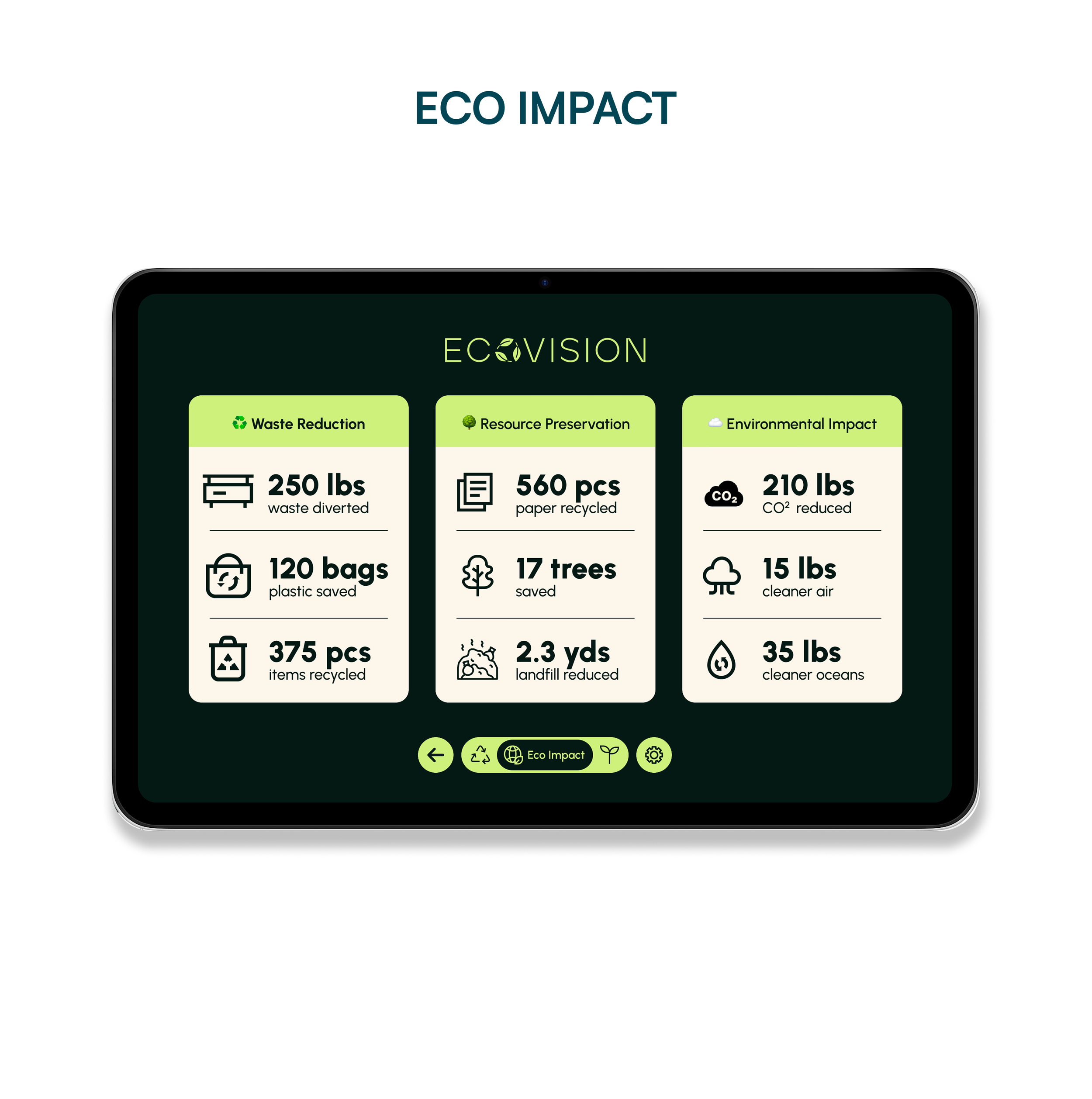
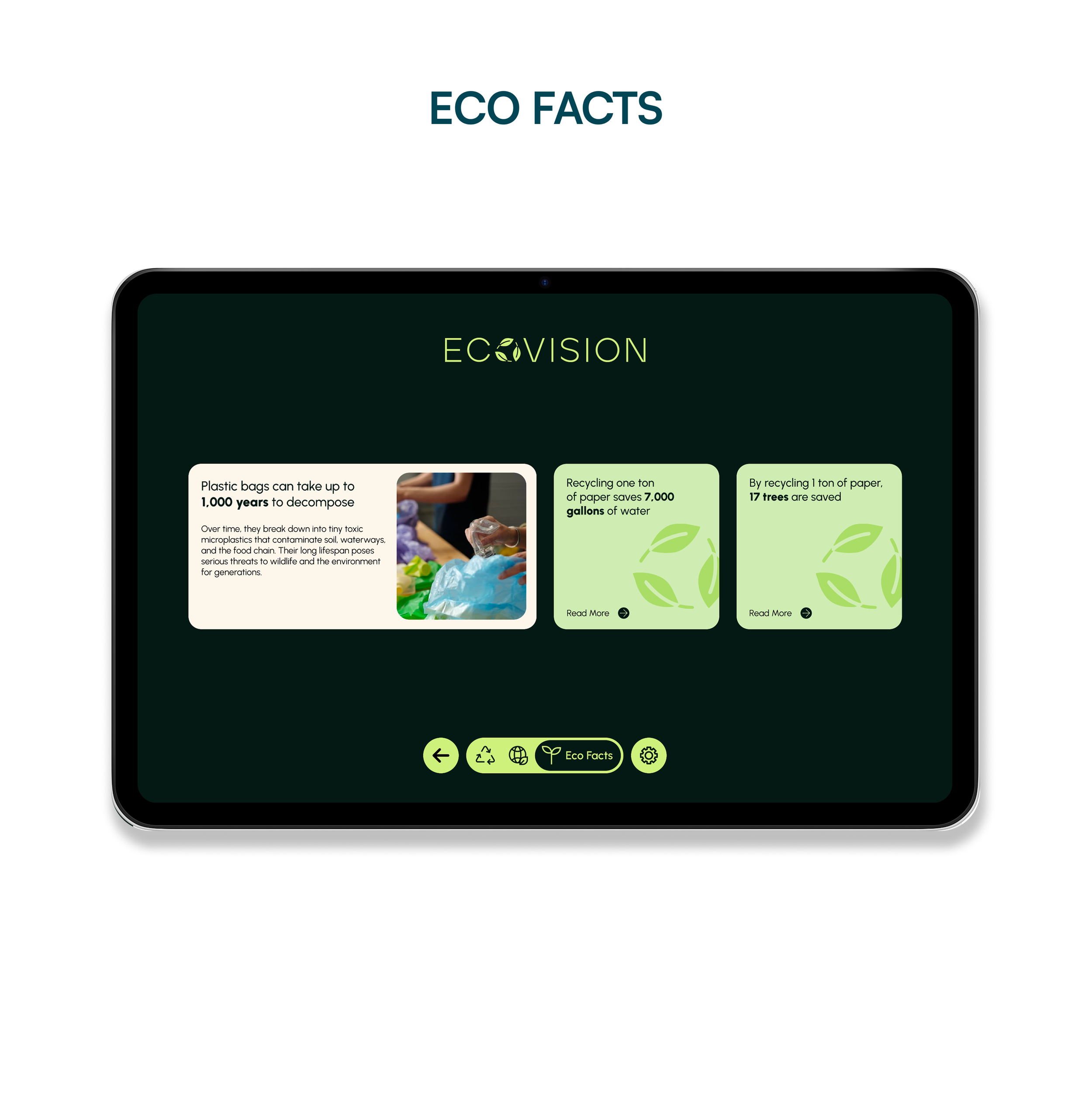
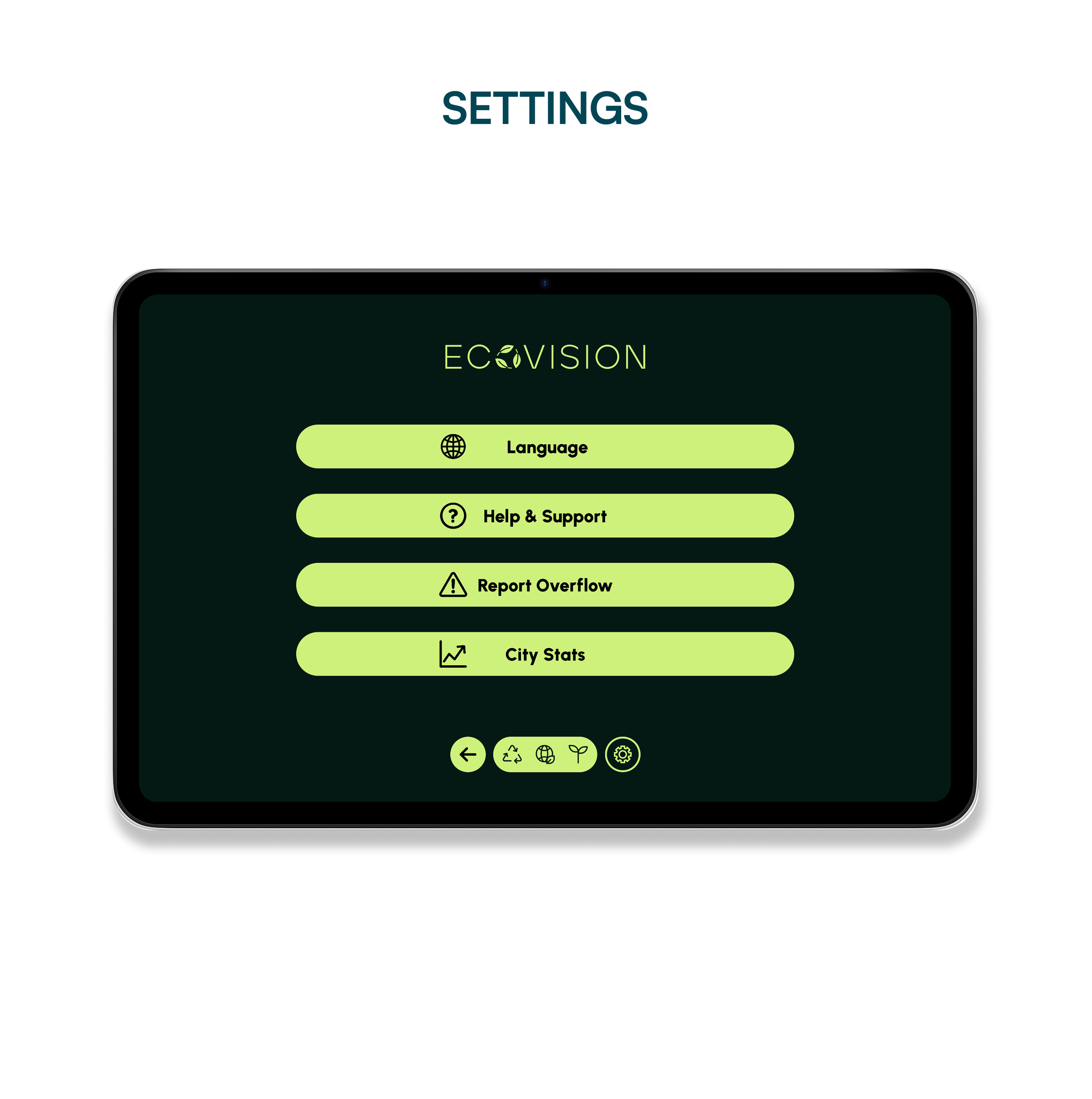
The system's architecture was designed around four high-impact touchpoints: the Interactive Bin Interface for real-time sorting, the Recyclable Tips and Eco Impactfor long-term engagement, Eco Facts to educate users, and the Settings for policy tracking. This structure ensures that essential sorting guidance is prioritized at the point of action.
Ideation & Iterative Design
The ideation phase began with a broad exploration of brand identity, iterating through over 20 name ideas and multiple logo concepts like "EcoSort" and "Greenify". This iterative process focused on creating a brand alignment that felt modern and trustworthy, eventually leading to the "EcoVision" identity that emphasizes clarity and foresight.
After, I moved into sketching prototypes for primary screens.
Design system
OVERVIEW
The Final Solution
Core Features
Prototype
prototyping
the final solution
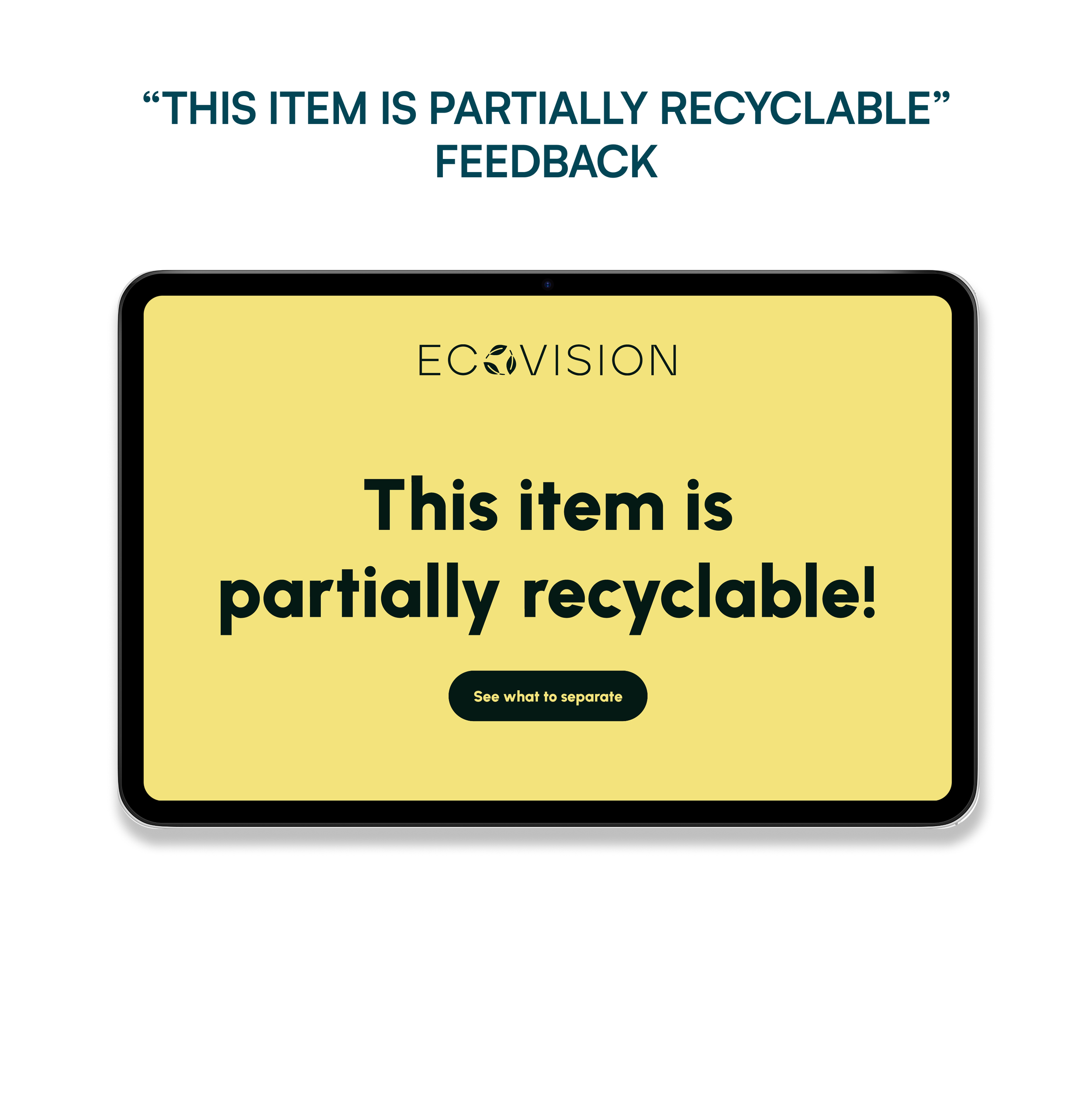
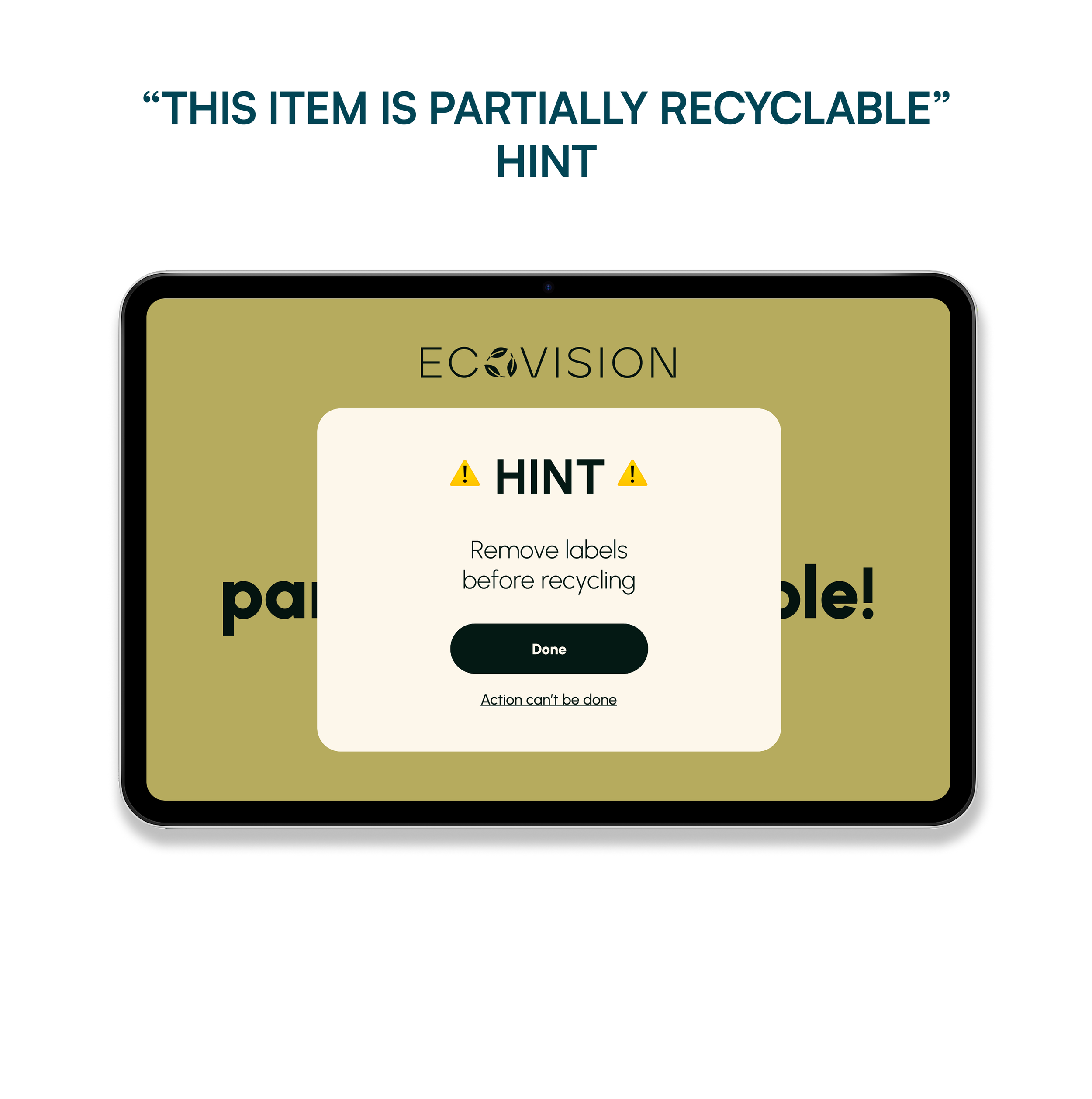
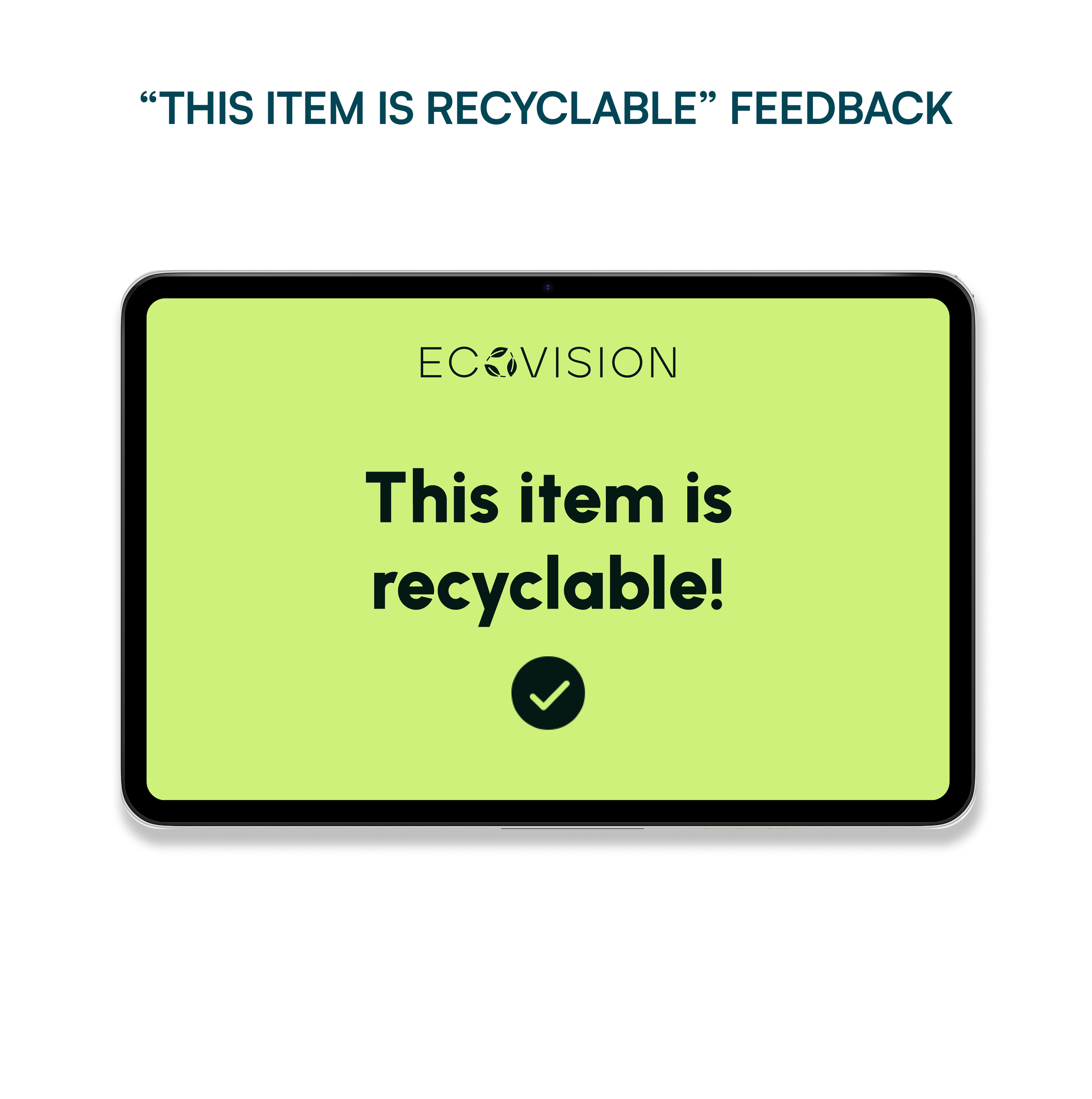
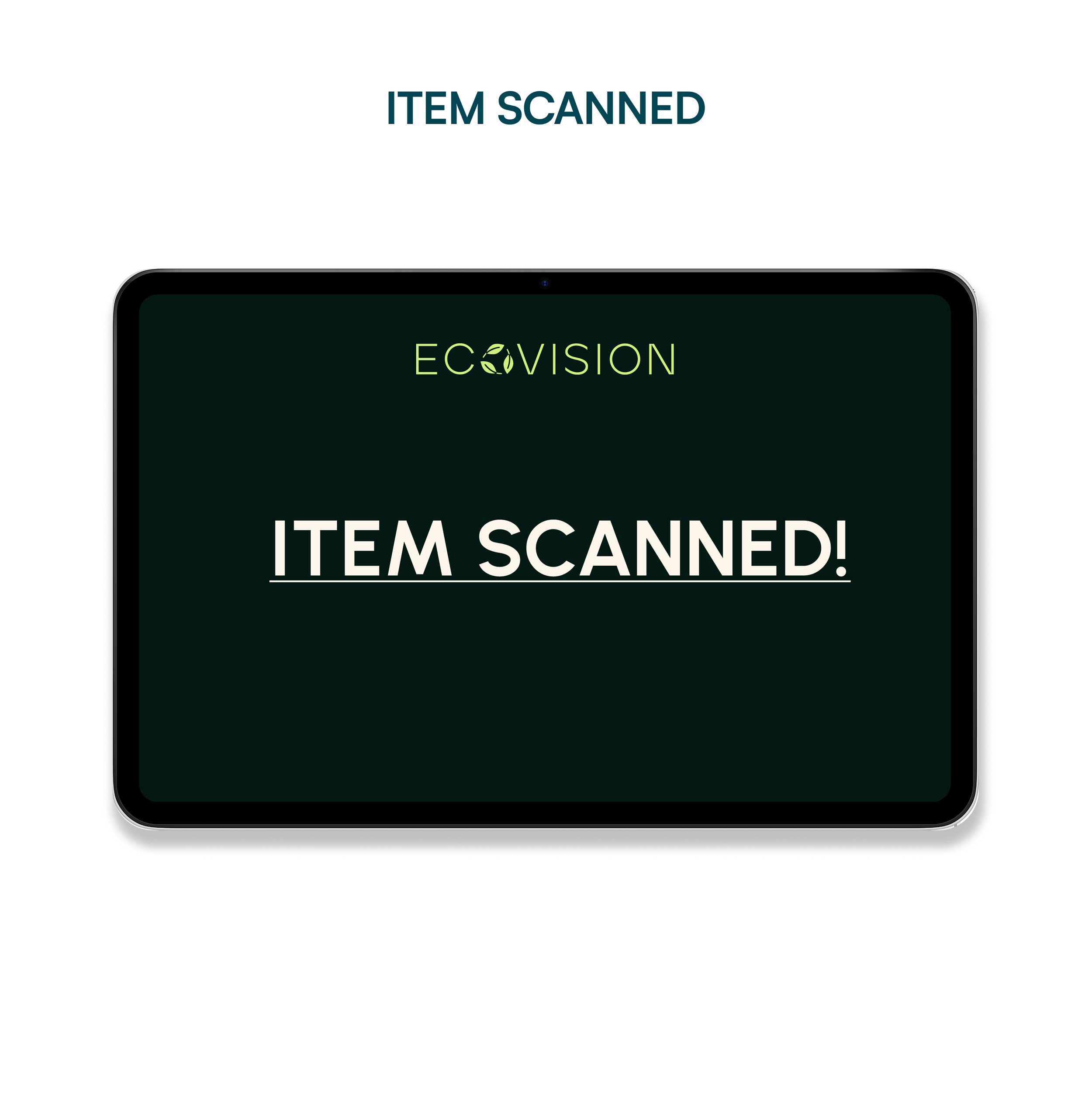
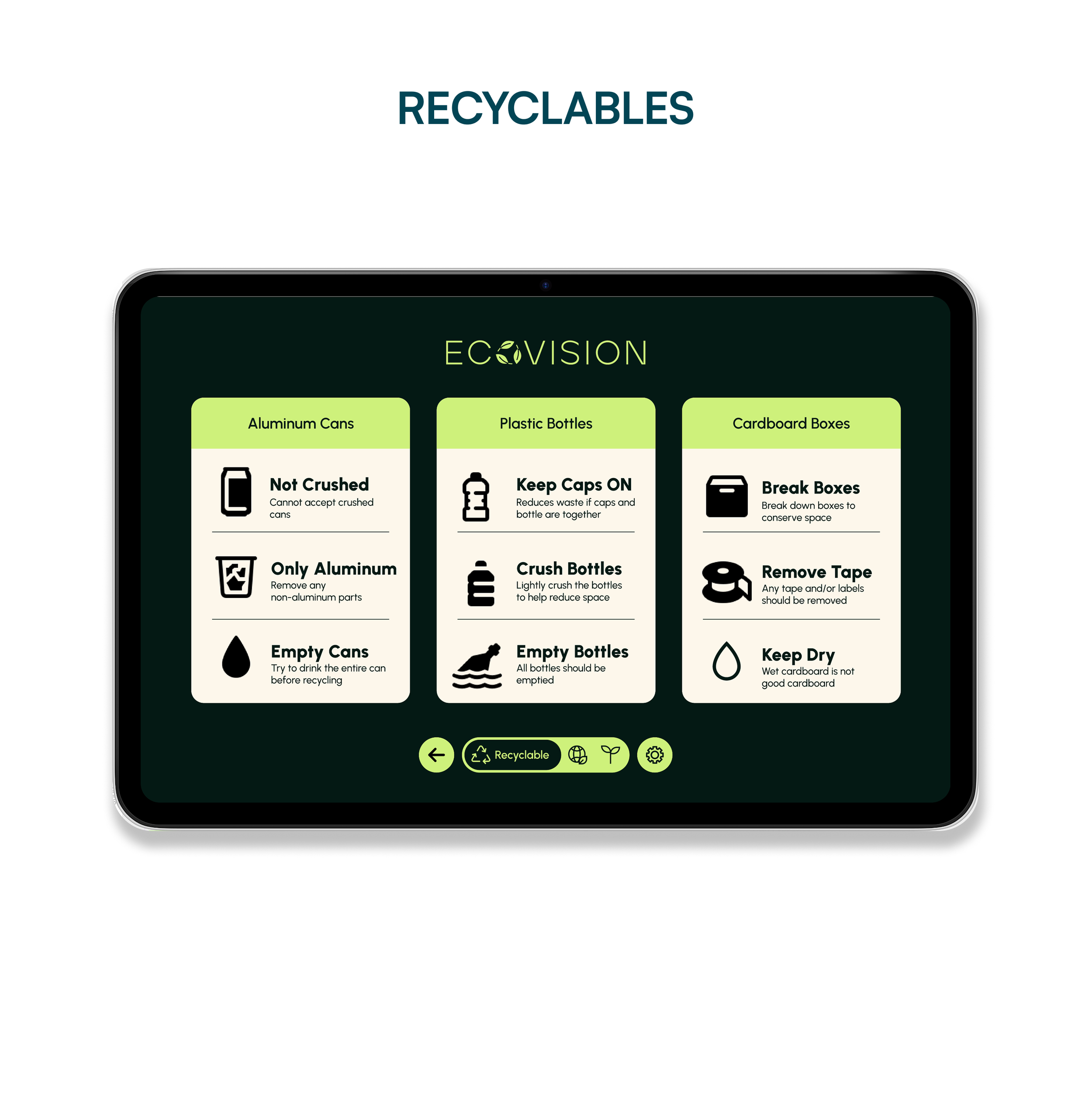
The EcoVision Smart Recycling Bin is an AI-powered waste system that uses sensors and an interactive display to eliminate the guesswork of recycling. It creates an engaging, educational feedback loop that transforms a mundane task into a meaningful environmental contribution.
Core features
AI Object recognition
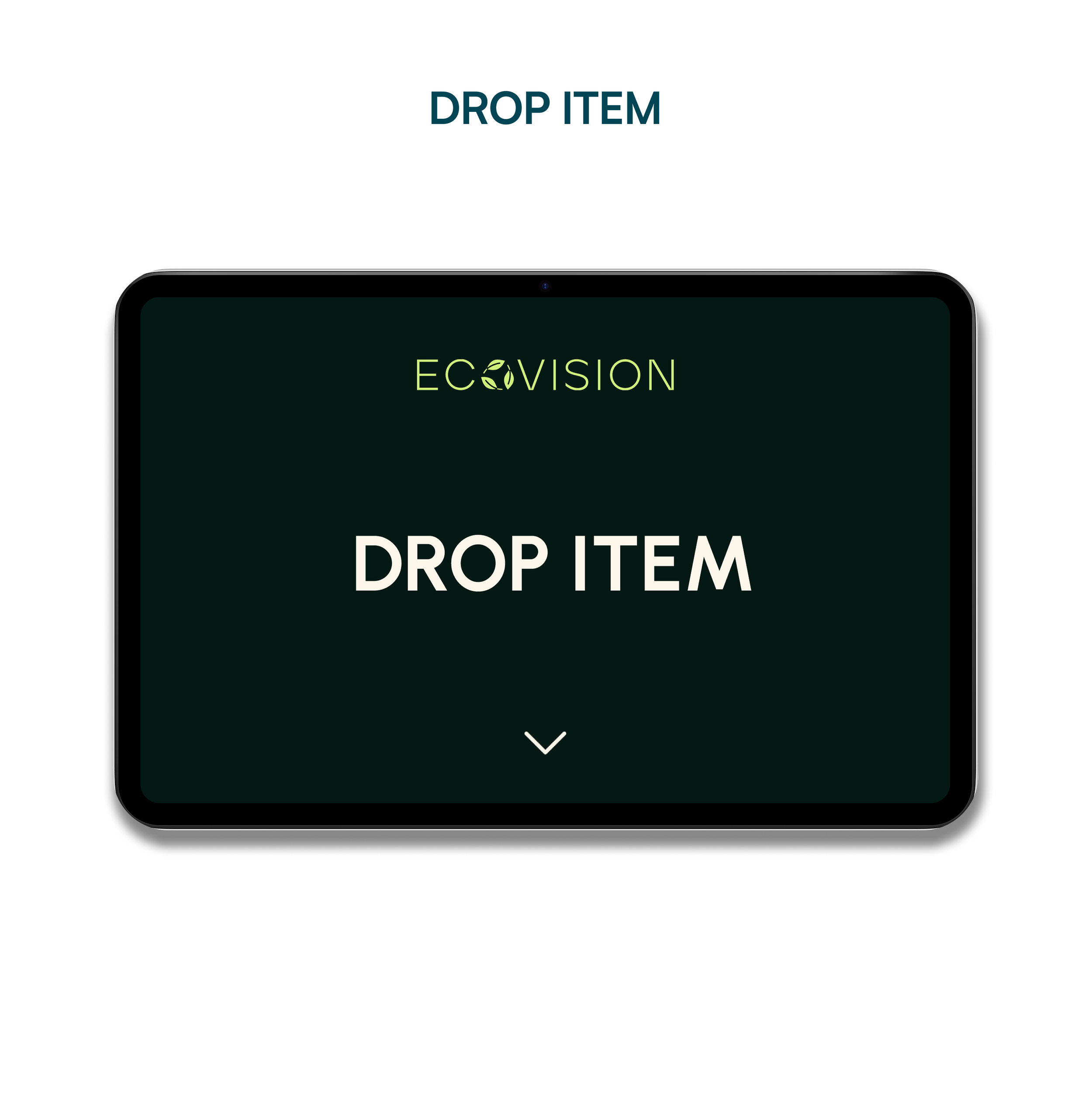
Uses sensors to automatically identify items by material and guide them to the correct bin.
interactive guidance screen
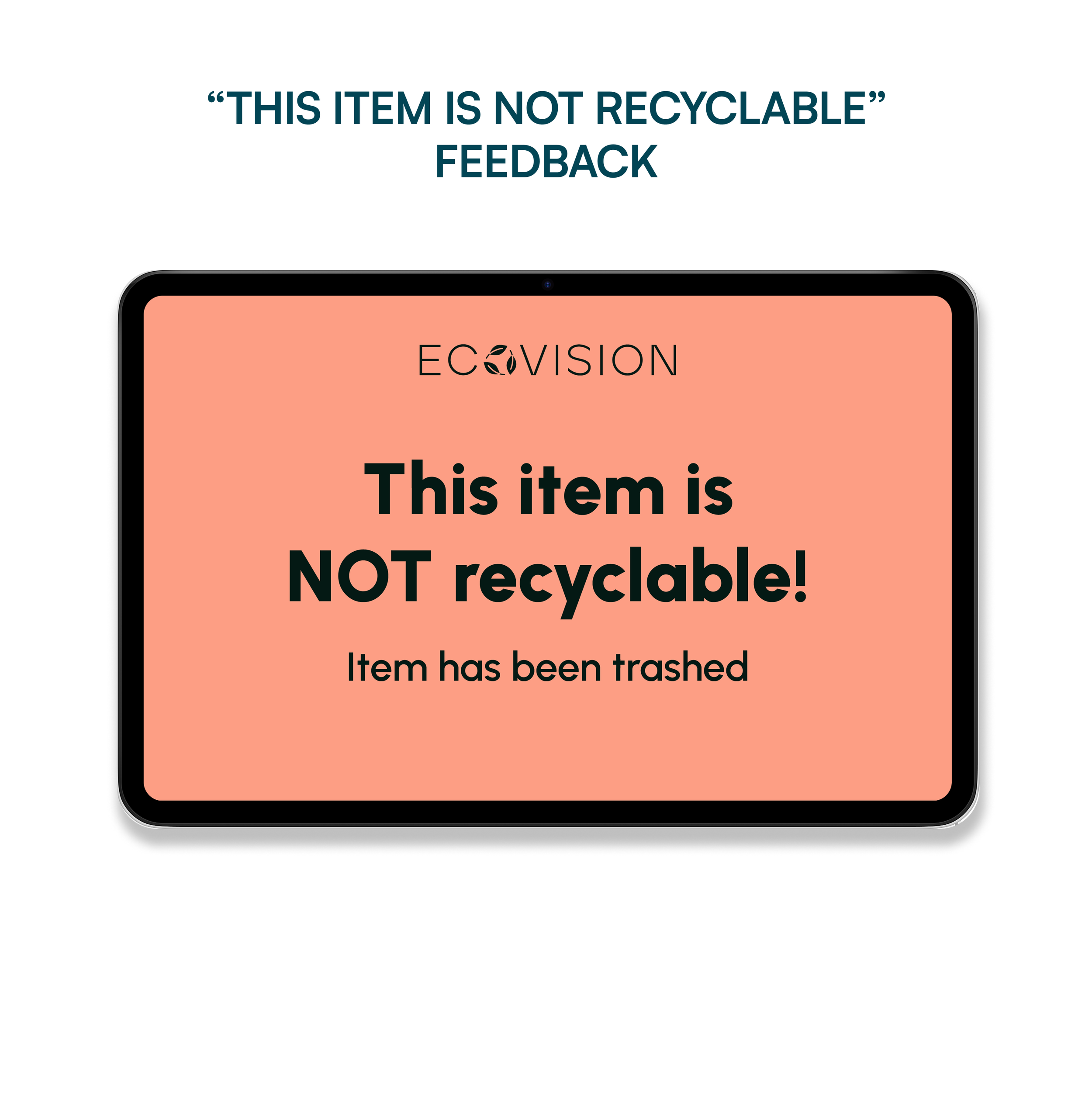
Provides clear instructions to ensure accurate disposal and reduce contamination.
PLANNING BURNOUT
responsive interface
Displays immediate energy savings to reward correct sorting.
Impact Tracking Dashboard
Allows users to see their cumulative environmental contribution over time.
OVERVIEW
Retrospective
Reflect
Retrospective
This project highlighted the power of combining AI technology with behavioral design to solve environmental challenges. While the system effectively addresses recycling accuracy and user education, the SWOT analysis suggests that future iterations must account for high maintenance costs and data privacy concerns. Moving forward, the goal is to validate the sorting logic through rigorous testing and explore partnerships with municipalities to scale the system's impact.